
Having spent many happy hours on campsites at Mèze and Loupian, I thought I’d make a list of places to visit in the area. I have made these suggestions to several people, so it’s easier to put it online.
Campsites. The Beau Rivage is perfectly situated, on the edge of town, just across the road from a supermarket, bakery, filling station, car wash and ATM. there are several oyster shacks to choose from for takeaway. It’s about 15 minutes walking into town, and right next to a tambourin court (think long distance tennis played with bodhrans). But the pitches are small, and water points difficult to find and use. (There is a gardeners’ hose point near the small utility block). A swimming pool, and sometimes open, a cafe. The other one I’ve used is the municipal at Loupian just up the road – more of a cycling distance from Mèze, but right next to the cycle track. The onsite oyster ‘shack’ is run by a friendly family who are producers; reception are friendly, and speak English.
The harbour at Mèze. Ringed with restaurants – my favourite was the Ambre Marine, though I’ve had a few coffees, and the odd lunch, at the Café de la Port. There’s a few flotilla yachts there, and usually the two water jousting cutters; a catamaran offers trips round the bay, and round the oyster beds. Just round the corner, next to the port Capitainerie, is the town beach, where one can cool off, and wander among the small fish and small children. During the town Festival de Patrimoine, local fishermen demonstrate traditional beach netting; there will be the grilling of mussels on a sheet of steel over a fire of old vine stocks, called a Brasucade. There’s a nice cafe/cocktail bar overlooking the beach; and an old style ice cream parlour.
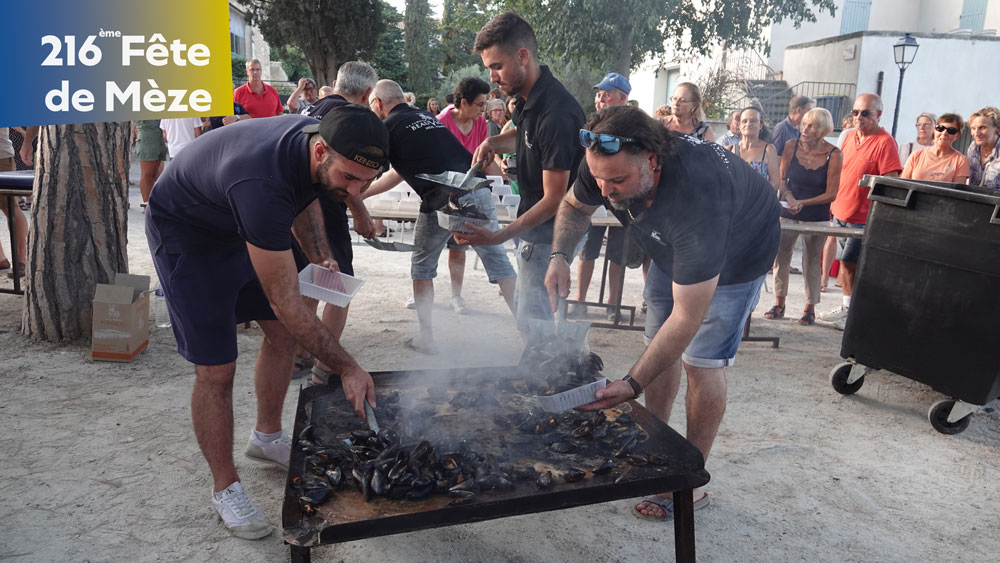
Bouzigues. This village is the centre of oyster production in Mediterranean France. The metal frames, from which ropes with shellfish glued on are hung, can be seen as a series of parallel lines across the bay. The warm, saltier water of the lagoon is also fed by volcanic springs fertilising the microfauna that the shellfish feed on. My favourite, just out of the village, was at a producer’s shed, called les Jardins d’Oc, where they had a restaurant on a wooden deck over the lagoon. The used to serve all kinds of fish, but fell foul of planning law, so they can only sell examples of the seafood they farm. Oh, and wine, this being France. Still…. I remember not being able to get a table, but eating punnets of brasucade mussels they were cooking on a plancha, at a table mounted over an empty barrel, with a hole in the top for empty shells.
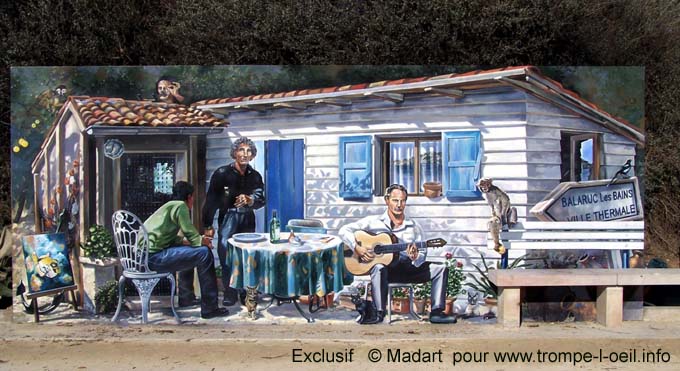
Balaruc is not only the host for the local hypermarket, and associated shops (I love going round Mr.Bricolage and Feu Vert; it’s also a busy little spa town, with a huge thalassotherapy centre using the hot waters that bubble up from underground. If you walk along the seafront to the garden at the end, there’s an interesting mural showing local boy George Brassens, Salvador Dali and others. Next door is Balaruc le Vieux, a pretty little hill village.
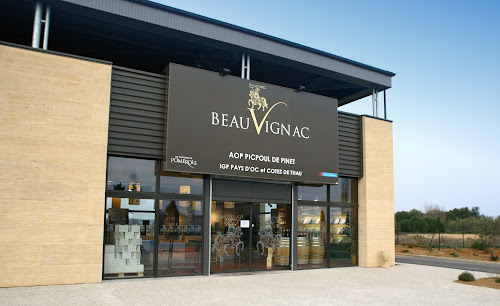
Wine production. This area is the AOC for Picpoul de Pinet, which has become fashionable in the UK lately. Though there are some smaller local producers, the main labels are Ormarine and Beauvignac. The latter is the name for the Cave Cooperative, which covers Mèze and Pomerols. They also produce very acceptable reds and rosés; there’s an outlet shop on the road north out of town, and you can buy from the winery in Pomerols. Seeing the latter at harvest time is an experience. Also, on the recommendation of a waiter, I’ve bought from a family winery . An unusual visit is the Abbaye de Valmagne, where the former chapel has been made into an elaborate wine cellar, with giant oak barrels filling the arches of the side aisles.
Aperatif and Digestif. I’m rather partial to a cold glass of Muscat de Frontignan. The co-op has an outlet not far away; it’s also possible to get a bottle of Marc de muscat, which is highly fragrant brandy, unlike many types of Marc which can get a bit rustic, made from distilling the grape skins. In the other direction is the village of Marseillan, which is the home of Noilly Prat, essential for the perfect dry martini. the factory tours were great, with tasting at the end, which encourages visitor to buy even more wine.

Excursions. One on my list still to do is the Cathedral of Maguelone, which once sat on an island, now connected by sandbars. It was the original see before that moved to Montpellier. Getting to it was interesting, involving a tourist train ride, and quite a long walk along the beach. The day we went was baking hot, so never made it. The beach is also listed, I found since, as ‘semi-nudist’. Another pleasant outing is to Pezenas, a pretty and historic town , up near the A75 motorway. At one point it was the ducal seat for Languedoc; so important people came here. Molière and his company spent some time here too. The regional capital is now Montpellier, home one of the oldest medical universities in Europe. It’s a very funky modern city, and worth taking the tourist train around. There’s a great park-and-ride, and trams everywhere.
It’s a beautiful area; in writing this it has reminded me of its many beauties. It’s a great area to visit; either to go wandering, or just to chill in the mediterranean sun. I hope these tips prove to be useful.
 Willma’s travels