
A slightly different post, one a little more philosophical in tone and less about practicalities. I enjoy travelling, as do many; I like driving when it’s not too busy. As Steppenwolf sang:
Get your motor runnin’
Head out on the highway
Lookin’ for adventure
And whatever comes our way
There’s a whole genre of American rock songs that reflect the pioneer instinct to keep moving west, or just keep moving if you’re from Tulsa. The campervan still has something of the hippy tradition, though born to be wild might be a bit much for some of the silver surfers of today. ‘Reborn to be wild’ is closer to the mark.
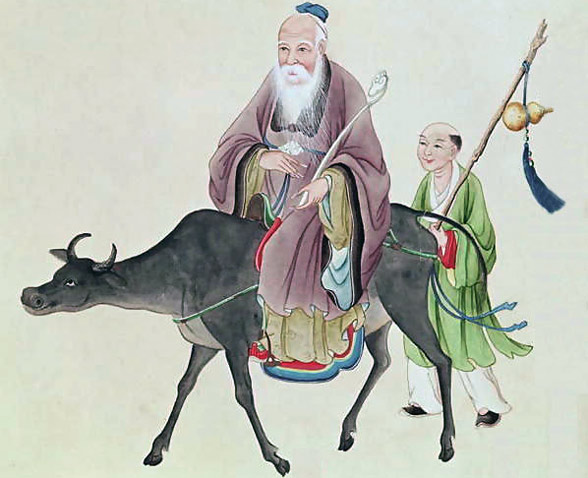
From another tradition, Lao Tzu was reputed to have been tired of the corruption at court, and left the kingdom by the western gate, leaving behind with the guard his thoughts in the Tao Te Ching. Riding a water buffalo, he ventures out into the wilderness and is never heard from again.
A good traveler has no fixed plans
and is not intent upon arriving.
A good artist lets his intuition
lead him wherever it wants.
A good scientist has freed himself of concepts
and keeps his mind open to what is.Thus the Master is available to all people
and doesn’t reject anyone.
He is ready to use all situations
and doesn’t waste anything.
This is called embodying the light.
- Tao Te Ching, Ch. 27, as interpreted by Stephen Mitchell (1992)
On the back of many campers, there’s a trend for bumper stickers: “Spending the kids’ inheritance”; “ Adventures before Dementia” and from Lord of the Rings, “Not all those who wander are lost”. It was observed by one wag that with many caravans, the better Gandalf quote would be “They shall not pass!”. I was quite taken by “Old Age Traveller”; but I do have a cartoon of Wile E. Coyote on order; my spirit animal.
The thought that’s been with me for a while now is the distinction between journeys and destinations. Project management, and Critical Path Analysis, distinguishes between event and duration; every good journey has duration, whether planned or measured. Unlike with a caravan, a camper places more emphasis on duration rather than event (arrival); and any destination tends more to the temporary, rather than the duration of the ‘vacation’. The destination is the journey, or at very least the pretext for it.
Robert Pirsig tapped into the nature of travelling and philosophy in ‘Zen and the Art of Motorcycle Maintenance’ ( famously, Pirsig said “it should in no way be associated with that great body of factual information relating to orthodox Zen Buddhist practice. It’s not very factual on motorcycles, either.”)
While we’re discussing the spiritual aspects of travelling, we can’t ignore the notion of pilgrimage. Particularly as I’m about to come across bits of the Camino de Santiago, and living as I do a few yards from the route taken by Canterbury pilgrims, I’m conscious that the need to travel and meditate is widespread across cultures: whether Catholics on their various journeys, or the Muslim obligation to Hajj; Sikhs at Amritsar, or Aborigines at Uluru all feel the call.
I read somewhere, and I’m kicking myself I didn’t note the reference of who said it, that every good holiday has an element of a medieval quest. The knight, pilgrim or supplicant has to travel far, be tested by the journey, even if it’s only the baggage carousel or the immigration desk; and gain a boon or reward, a holy grail (cue music!): whether it’s the perfect tan; the bottle of wine that is a revelation; the straw donkey and sombrero; the file of photos to show everyone. And we must return refreshed, cleansed, improved in some way. Pilgrimages set a template; Chaucer could have been describing a package trip or a cruise. We all recognise the types from our own travel companions.

Setting a theme for the trip is useful. I’ve been off in search of troubadours, castles, priories, cathedrals, unusual vineyards and vintages, sunsets, rivers, bridges and viaducts, painters and their subjects, rare or shy birds – the Golden Oriole anyone? At times trips to France reminded me of Astérix’s Banquet, where our Gallic heroes are charged with collecting delicacies from all over Gaul. Another journey, another quest. Now my armour is bright, my steed is fed and watered, my pennant flutters from the point of my lance; and, like Quixote, I must be off.

