
it took about five hours from Charentes to Orio; the new motorway tag worked, a relief. I find myself in a third country, and despite my efforts over the winter, the language didn’t flow. I was just about starting to think in French, then this new disruption. In the two tapas bars, with a glass of red for social lubrication, I was forgetting the simplest of phrases. Por favor, Lo siento …. Whether this was my usual day three tongue-tiedness; not really much better today. Also, managed to order too much food: calimari and two pieces of hake with lettuce and chips. This was tapas! Managed to crash another family group: Nigel, his brother and sister in law, from Plymouth, a ground worker who had been encouraged to set up his own subcontracting firm. Saved them money, he suspected. Curious, I asked whether it was better than working for the gas board. Yes, he said, mostly for the opportunity for creative bookwork. But he missed the camaraderie of the old ways.
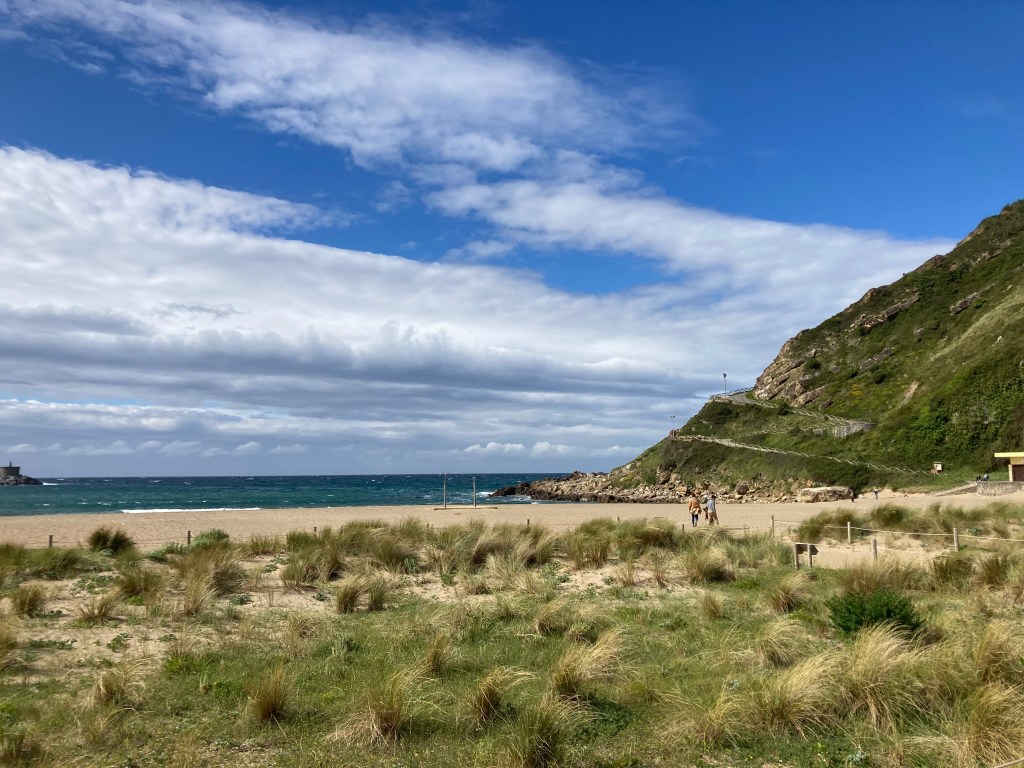
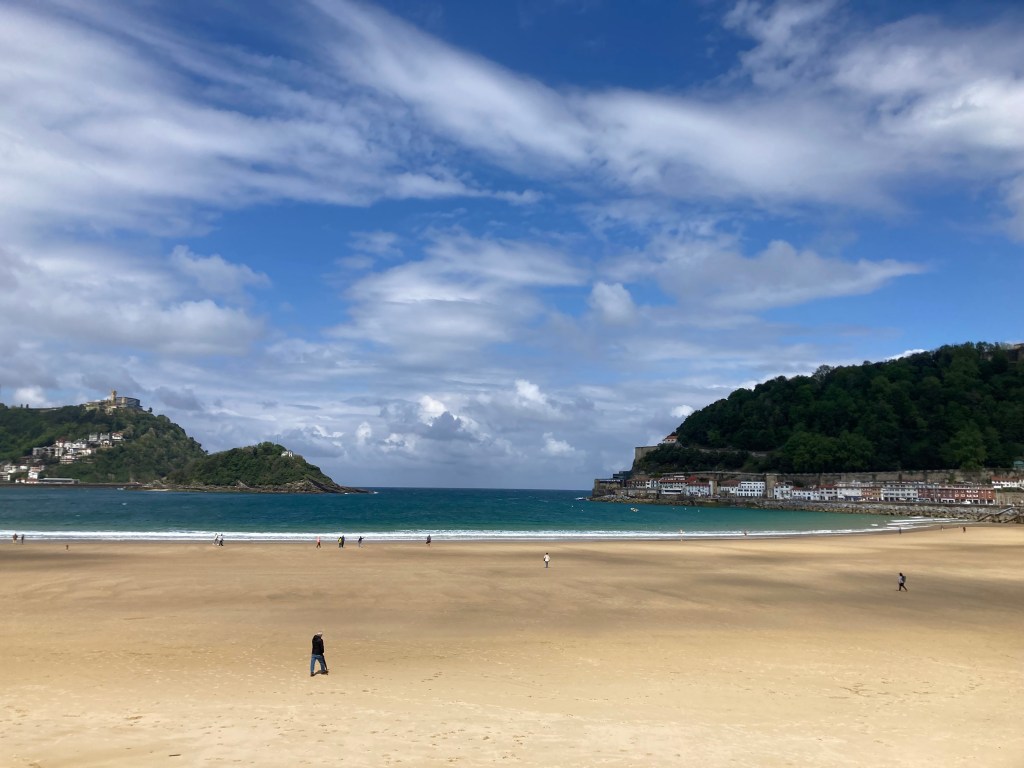
Today I went to San Sebastián or Donostia. It is stunningly beautiful, set on a large inlet, or ria, like Orio. The train, from over the river, run on a light railway through the mountains, the foothills of the Pyrenees. I walked through grid of roads that makes the town, past the harbour and into the Old Town, clutching my guide to pinxos: my reason for coming was to experience the food culture.
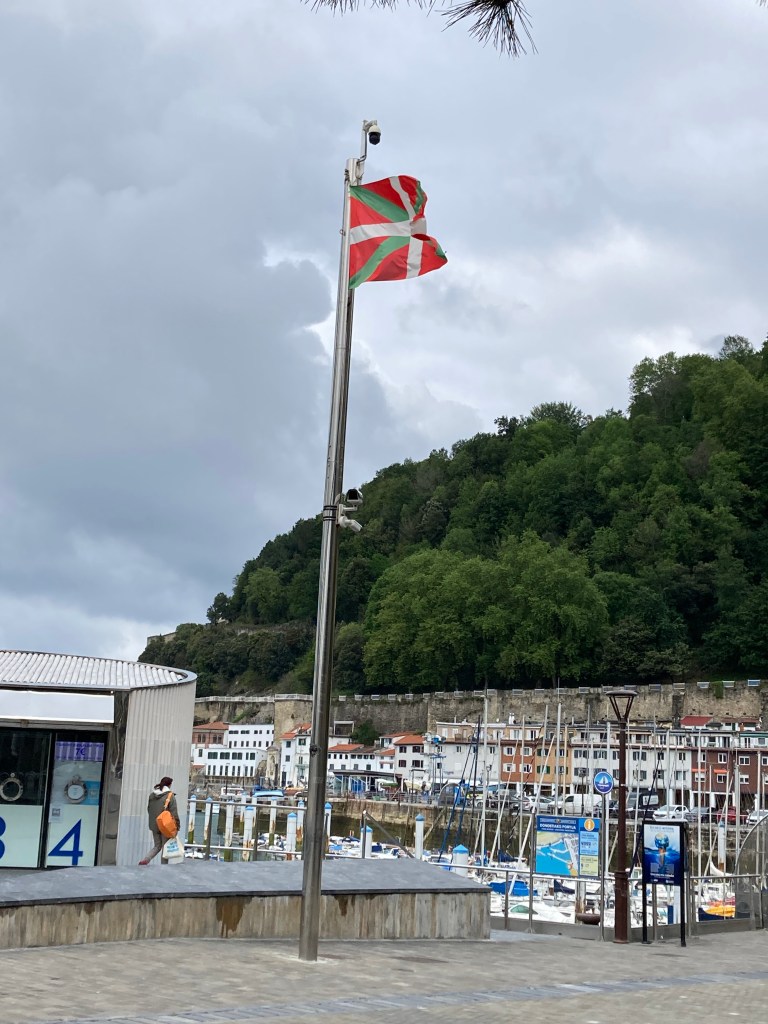
Using a downloaded map, I did find one of the recommended pintxos bars, and the array of snacks was truly colourful. The maître d asked whether I wanted a table for tapas or restaurant: I chose the latter, I needed the sit down. Oysters, followed by cod with crystal peppers. I was well fed. Basque meals are generous.
Back to Orio/Aria by train. Each place has, of course, two names, Basque and Castilian. Bought my ticket, €2.40 for the return, got the train to Something/Oria. Being somewhat suspicious, I asked a pleasant looking abuela, ¿Esta la trena para Orio? With a combination of loud speech, sign language, and involving half the passengers in the carriage, they told me I needed to get off at the next stop and go back to Donostia. As the debate continued, I stood up and said ¿Habla Ingles? which no one did, but they smiled. I was rescued by the train itself, which developed a fault. The driver walked through to the other end explaining this (I gather), and that we needed to go back to Donostia. I didn’t object. My friendly granny tells me I had been lucky. As we all step off the train, she tugs at my sleeve and points to the right train, confirmed by other travellers. Muchas gracias, Abuela! Throwing myself on the kindness of strangers seems like a good policy.
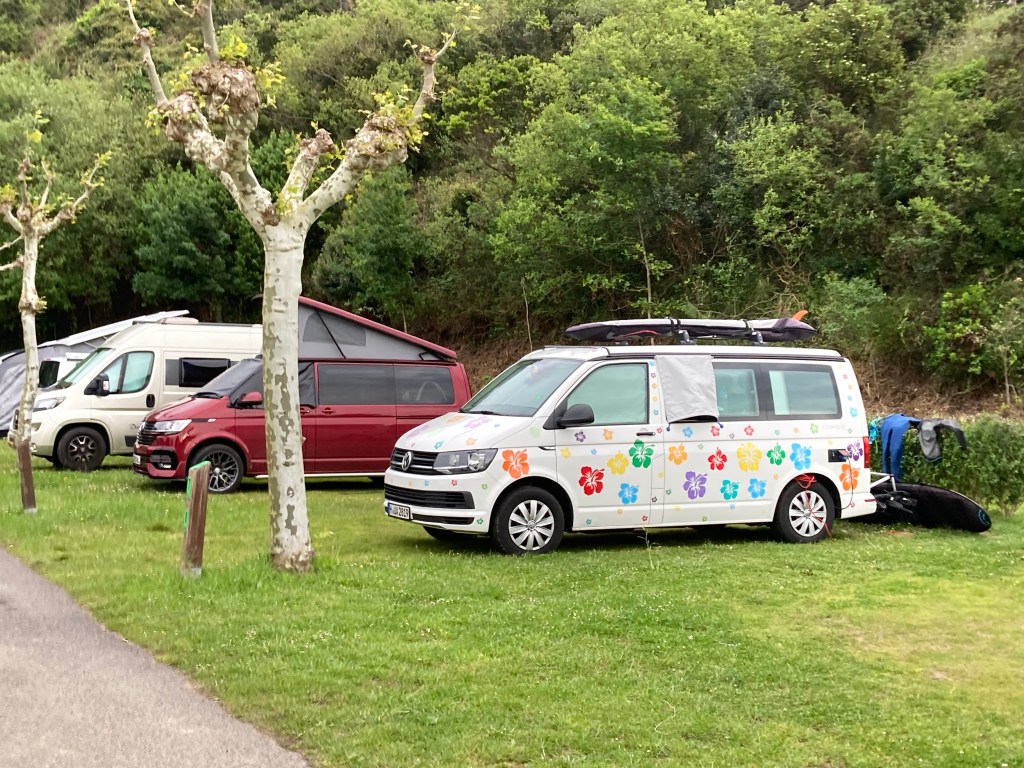
Settling back in the camping, got chatting to my neighbours, two water sport enthusiasts from Hanover, who invited me over, as the side doors were facing. After a while I offered a glass of wine, and they suggested we go to the bar, where we polished off a bottle of Rioja together. Günther and Ute were charming company, they told me about the sudden decline in German industry, which seemed to be stemming from the decision to close down the nuclear power stations. Ute tells me that it is now cheaper to manufacture in Switzerland even (where she works) than back home. Their van, self decorated, is also a grey import. Günther says the works where it was made he can see from his house, but had to go to Denmark, where the van is €1000 or so cheaper.
They also have a son who is Asperger’s; so a long discussion on neurodiversity. The most lovely story; he found a job at a call centre, but because he has difficulty with interaction, his speciality is dealing with irate customers, particularly Saudi, who often threaten death in revenge for whatever! This doesn’t trouble him: so is able to talk them down, by focussing on how he can resolve their problem. It’s a gift. All together a lovely evening.
Tomorrow along the coast to Shaun and Anna’s, and the Picos de Europa.


[…] behaviour and into adulthood, seems to fit the patterns of ADHD. I remember last year having the conversation with the German lady, Ute, in Orio about her son’s autism. There’s certainly an inherited family trait of […]
LikeLike