
Having arrived at Oloron Sainte Marie in a very pleasant 27deg, the evening turned out to be thundery, with rainfall to match. Today, Sunday, it is mizzle. I thought I’d wander into the city, then the mizzle turned to drizzle: my Dutch neighbours have set off, suitably kitted with raincoats and umbrellas. My brolly was ripped apart by a gust of wind in Orio: I bought a sun hat instead yesterday! Time to sit back, enjoy a light lunch: I bought rather a lot of cheese and fruit yesterday, and had wine, bread and salad, with a fried duck egg for dinner last night. I’ve tidied my clothing cupboard and restructured the storage a little. The anxieties before the journey inevitably resulted in some mistakes, mostly poor clothing choices; too many cold weather clothes for one; and a sock/ undie box which has now been repurposed as an emergency/overflow larder.
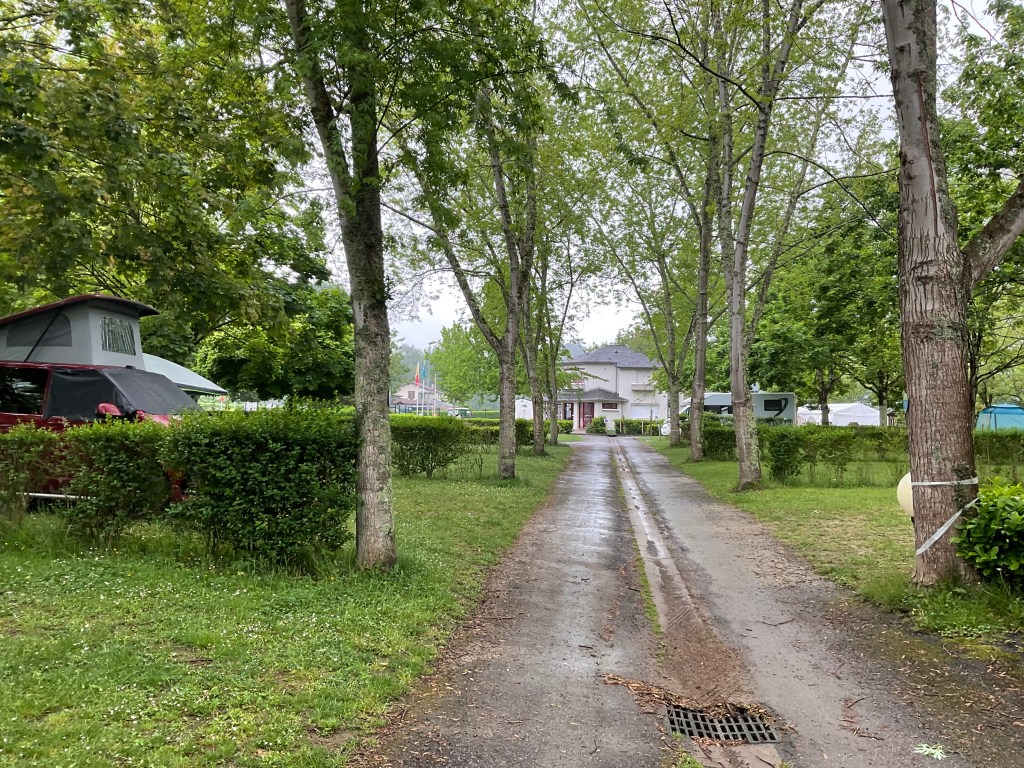
The French are really set up for camping: they had a brilliant set of Municipals; as I heard it, as part of postwar reconstruction investment was channeled into industry rather than housing, so to escape their homes local towns developed campsites, next to sports complexes so people could experience the health benefits of le plein air. (Also, in passing, the extensive restaurant culture here.) There is a polite dignity about social interaction: like campers everywhere it is easy to make acquaintance, but the proprieties should be observed. M’sieur, Madame , then one can get into chatting and even joking. French social humour, like English, is quite ironic, and self deprecating. The mild formality gets in the way of the stronger sledging we Brits sometimes indulge in, to the consternation of, for example, our American cousins; the Aussies and Irish are straight in there with that.
The muni’s seem to be privatised now, either to family groups, or to marketing chains; some have gone coin-op with the CampingCar card entry system. I’m pretty sure this is to do with French labour laws, which impose a 35 hour week. It must be very expensive to fully staff reception for a decent period of time, so some ingenuity of arrangements has been put in place, with self employment, as in England, being used both as a way of gaining control and ownership of the means of production, but also cost cutting.
Generally the shift from top down control, to a more cooperative style of organisation seems to be happening quite extensively, and I’m not hearing much comment about it. The creative industries have a long tradition of individual workers and co-op working, which tax laws in the UK recognise with Schedule D status. The BBC moved from commissioning from producing drama some time back, reducing employee stability while also reducing layers of control. Always a double edged sword. With the loss of large industries, and privatised control of utilities corporations (as we saw with my gasman on the ferry), these patterns are gaining ground.
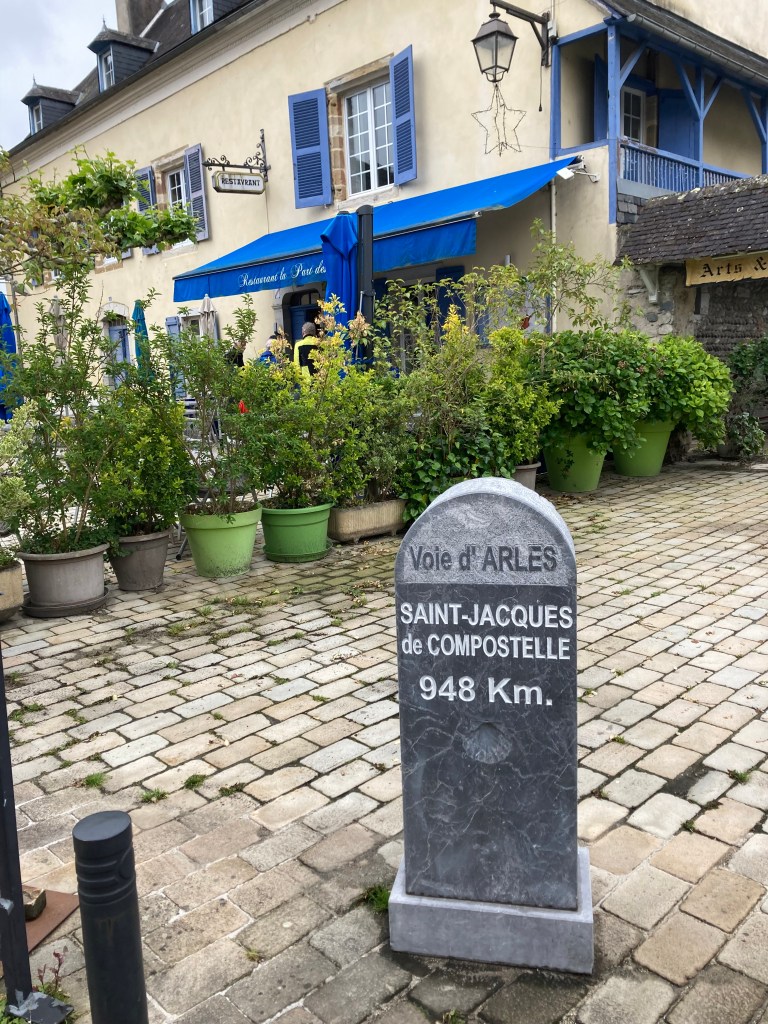
Spain’s accession to the EU has been good; and King Carlos’s management of the transition from fascism to pragmatic democracy was admirable. Still, the autovias (built I assume with EU assistance) turn into winding country lanes where they haven’t dug the tunnels or built the bridges yet; the lack of rest areas and other infrastructure shows there is still a way to go.
Spain struck me as a curious mix of the modern and traditional. In the villages, the passo seemed usual; often the elderly infirm being helped by a younger female or two. I’m reminded, however, traditional village life was romanticised by the fascists in a backward looking idealisation of the past. They loved a world where everyone knew their place, where priest and politician were obeyed without question. And we see it again with war on Woke. The tension between global and local, and the search for authenticity in modern times is hard to reconcile, especially when commercial forces push a monetary agenda. Shaun and Anna’s project, to remind us that sustainable alternatives exist, especially in areas where an elder generation is no longer capable of the efforts involved with hill farming.
The hope, I think, is in widespread broadband coupled with a reasonably free internet environment, which helps resolve some of the conflicting urges. My generation, the soixante-huitièmes, hippies and fellow travellers – yes, with their split window VW campers – couldn’t quite manage sustainability, so it became just protest. Then the New Age travellers took on the rejection of corporate modernism, scavenging on its worn out material. In these times I admire the idealism of the Greens, but they do need to acquire some pragmatic adoption of the realities of political life, including greater emphasis on New Economic theory.
Enough waffle for now. The next post will be about the trip to the Med; the other pilgrimage I’m making. Hasta la vista!

