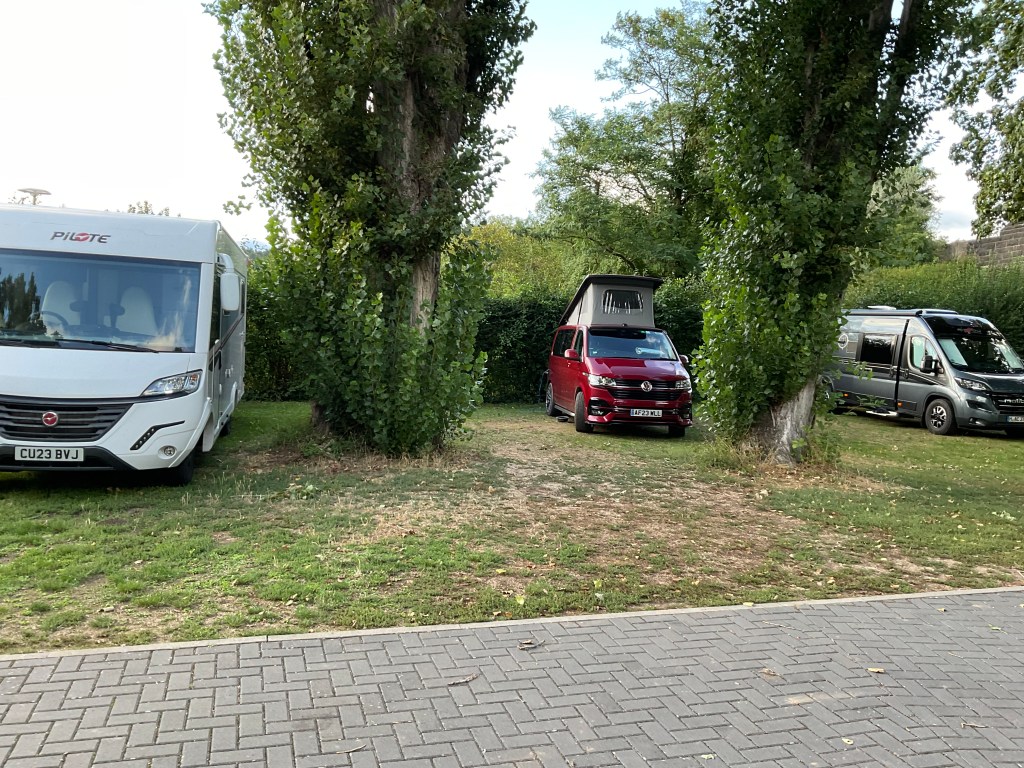
Well now, here’s a to-do! Looks like German campsites are packed at the weekends; and like in England, it’s best to make a reservation! Arrived at the Camping am Rhein, about 12.30, to be met with a long queue of motorhomes, many of whom hadn’t booked either. Reception were offering one night, which I took. My sightseeing I can fit into an afternoon, I think. There may be more tomorrow; though that feels to me like a put-off. On the basis it’s the weekend, I took the precaution of ringing my next stop, in Trier. “Sprechen zie English, bitte?” “Ja. Completely booked for the weekend” is the short version. (I’m just watching an animated Dutch camper, who is unhappy with his allocated pitch, I think. Lots of gestures pointing at the ground, and loud speech to the Dutch in the neighbouring pitch. After moving his motorhome a couple of times, he seems to have reconciled himself.) My options therefore are a) to go back to reception in the morning to see if they can find another pitch, b) travel on and take pot luck c) beggar off to France, where I can speak a bit more of the language, and I feel comfortable with the systems. I’ve made a provisional shortlist for the c) option. Karl Marx’s birthplace will just have to wait: maybe I’ll pop up to Highgate cemetery later, and say hello to his bust. Anyway.
I left Koblenz by 10:30, so a quiet run by the side of the Rhine, once I’d unlost myself in Koblenz’s road maze. Out of town, I picked up the river, on my left, with the sun glinting on the water. Boppard is a beauty spot – lots of half timbered houses. Passing on, came to St Goar, where the route took me over on a ferry. There were quite a few on the next stretch; I found out why later. All along, I was being buzzed by martins and swallows, an amazing sight; had trouble keeping one eye on the road.
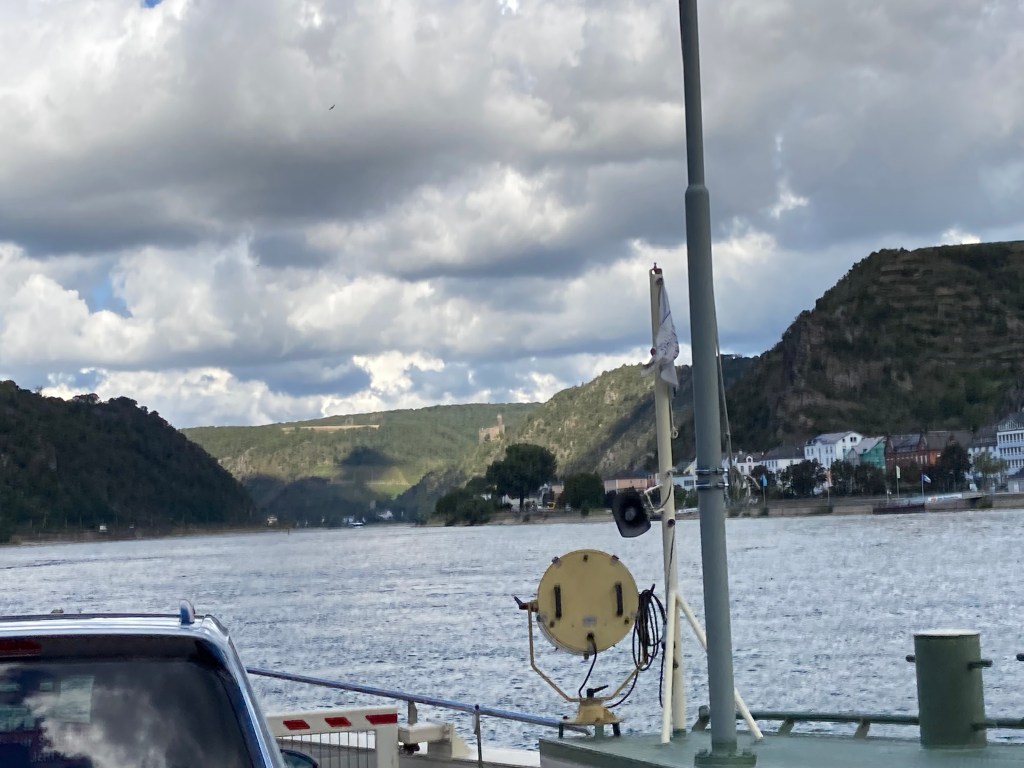
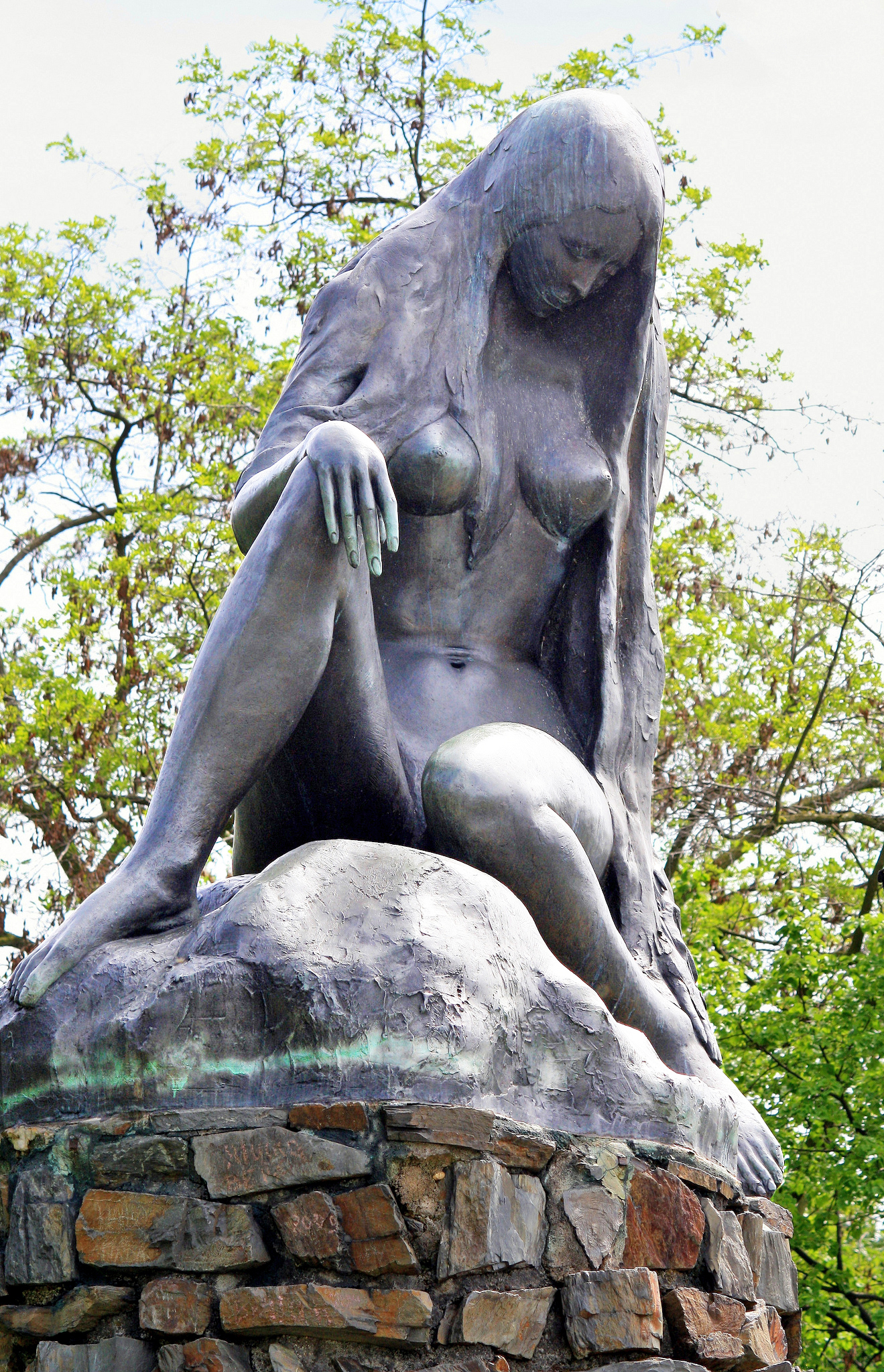
This is the section of the river called the Romantic Rhine. There’s a great section in Ben Coates’ book, which I won’t repeat, on what romanticism means, and meant; and a list of great victorians from many nations who passed this way, on their own Grand Tour: the predecessors of the cruise liners plying up to Basel. I was looking for some Rhine maidens; the only one was the sculpture of Lorelei, sat like a grown up Little Mermaid on a lump of rock. There wasn’t a stoping place to take photos, sorry it’s not my image; didn’t stop a motorhome pausing for a moment though.
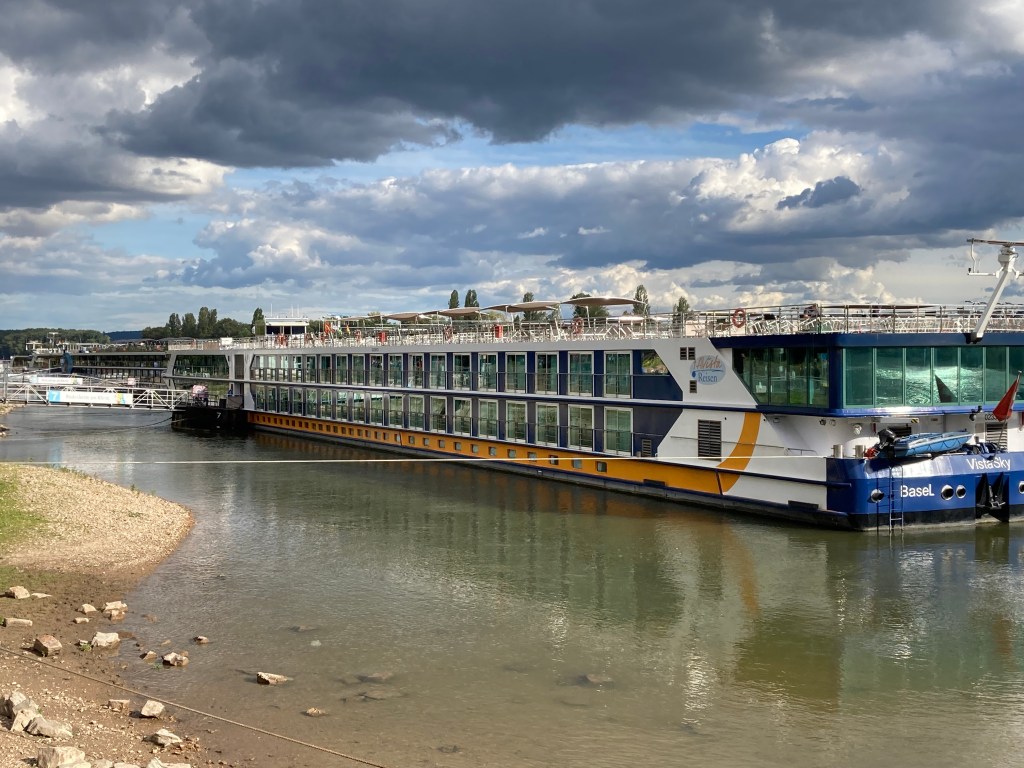
With the river now on my right, made my way to Rüdesheim, a strip of cafes and gift shops along the river front. There are at least eight piers for cruise boats, (update: over 18!) most of them occupied. When I walked past later, crew members were taking a break, eating ice creams, or just chatting on riverside benches. One boat was taking on supplies of delices de France from a German supplier; another was doing interesting things with small and big pipes, and a control box with pumps of some kind. Always the stage manager, I find backstage of any operation a source of fascination. The camping is just at the end of that quayside, with a small gate from the cafe area, just past the Asbach pool. (There’s lots of things named after Hugo Aspach, who introduced brandy production to the town).
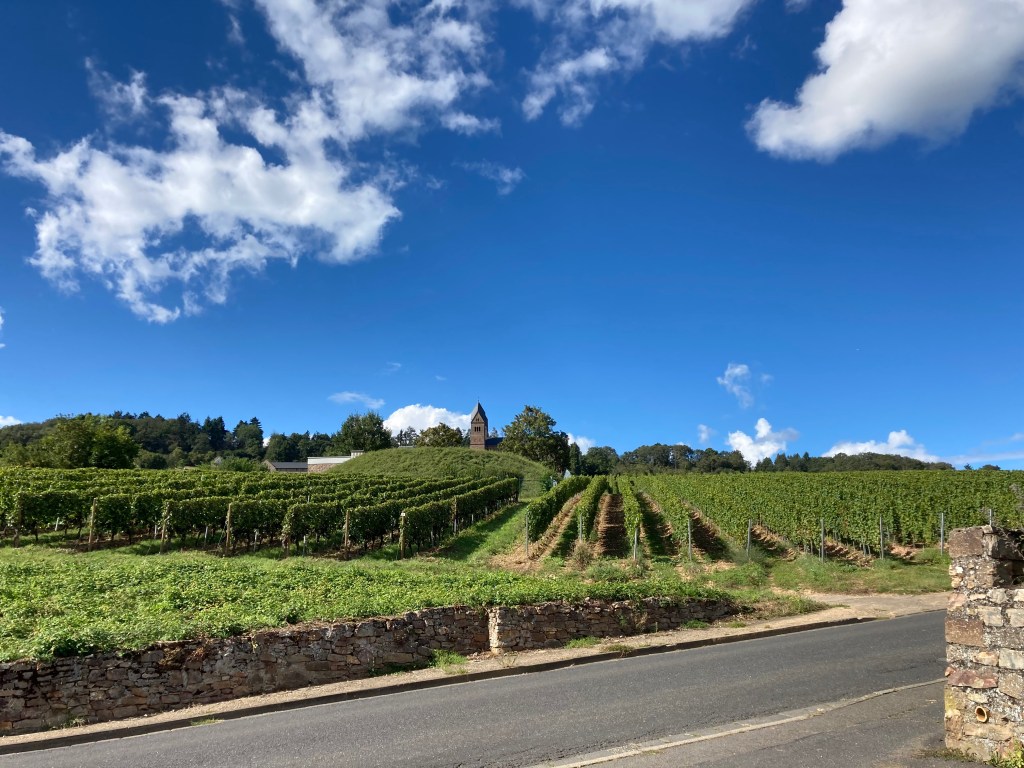
Forgive me for not mentioning the reason for the visit. Apart from travelling the Rhine Gorge, which is rather pretty, Rüdesheim is the last resting place of Hildegard of Bingen (confusingly, Bingen is just over the river): a poet; composer of plainsong; philosopher; and protofeminist, or at least feminist icon of the Middle Ages. Her monastery is at the top of the hill behind the town. While nuns still beaver away making wine, like everyone else round here seems to, her relics sit in a church on the outskirts of town. I found this out by accident. I thought I’d be brave and make a pilgrimage to the abbey; with 15 minutes to go, and a steep climb through an overgrown footpath, I gave up.
On the way back, seeming following the Hildegard Trail, I found the church where various skulls, femurs, and other bits of bone were carefully wrapped in white or red cloth; and put on display in a humidity controlled display case.
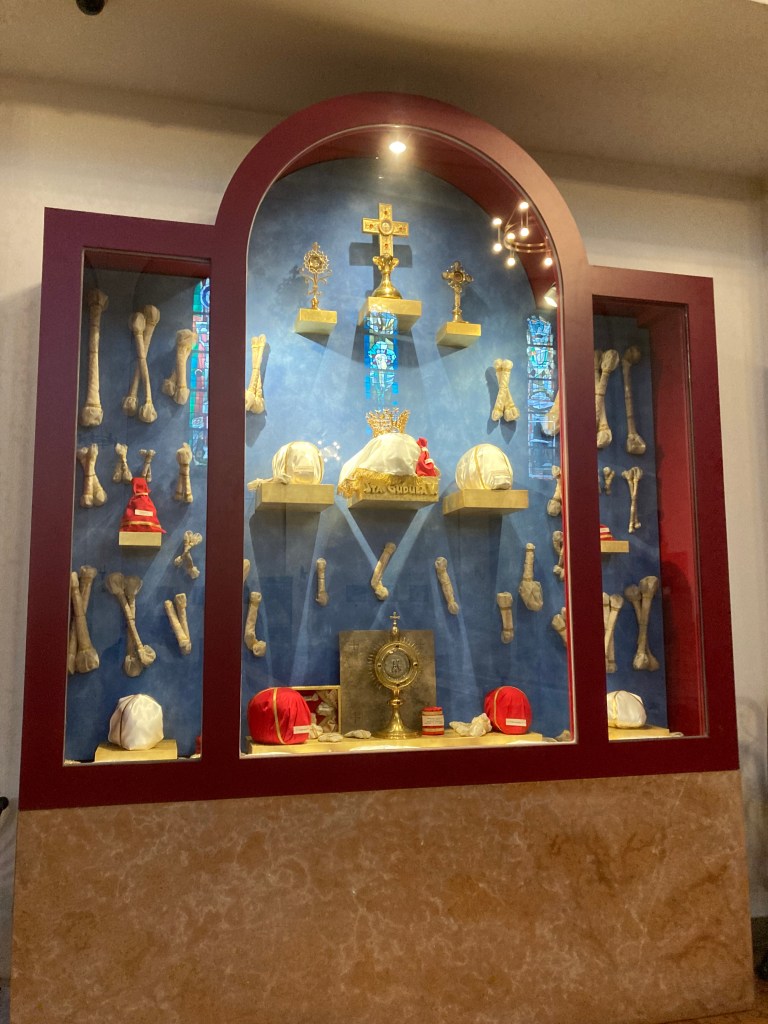
This is an area of Catholic faith I, with my Protestant/freethinking/agnostic upbringing, find not only odd, but vaguely troubling; with so many bits of anatomy laid out; plus the emphasis on the veneration of Christ’s mother, more than attention to the thinking of the Son of Man, points to more pagan origins than I’m used to.
Bits of German are starting to come; much like in Spain, the snippets arise from deep memory, sometimes unbidden. I still find myself getting annoyed, and unable to gabble in excruciatingly bad fluency, like I can in French: not even yet at the stage where I remember enough to have a go and make mistakes. So I wimp out, use a few sentences, then “Sprechen zie Englische?” At least the universal greeting, with a variety of intonation, is “Hallo!”, sometimes “Morgen!” I did have a conversation last night with a couple at the next table, aided by Google Translate. This is where I discovered the German name for a VW camper is bulli; a compound shortening of the words for works van and people carrier. “You’re the one with the red bulli?” I’ve even seen it on booking forms, not knowing what was meant. Now I know. Maybe next time I’ll do better.
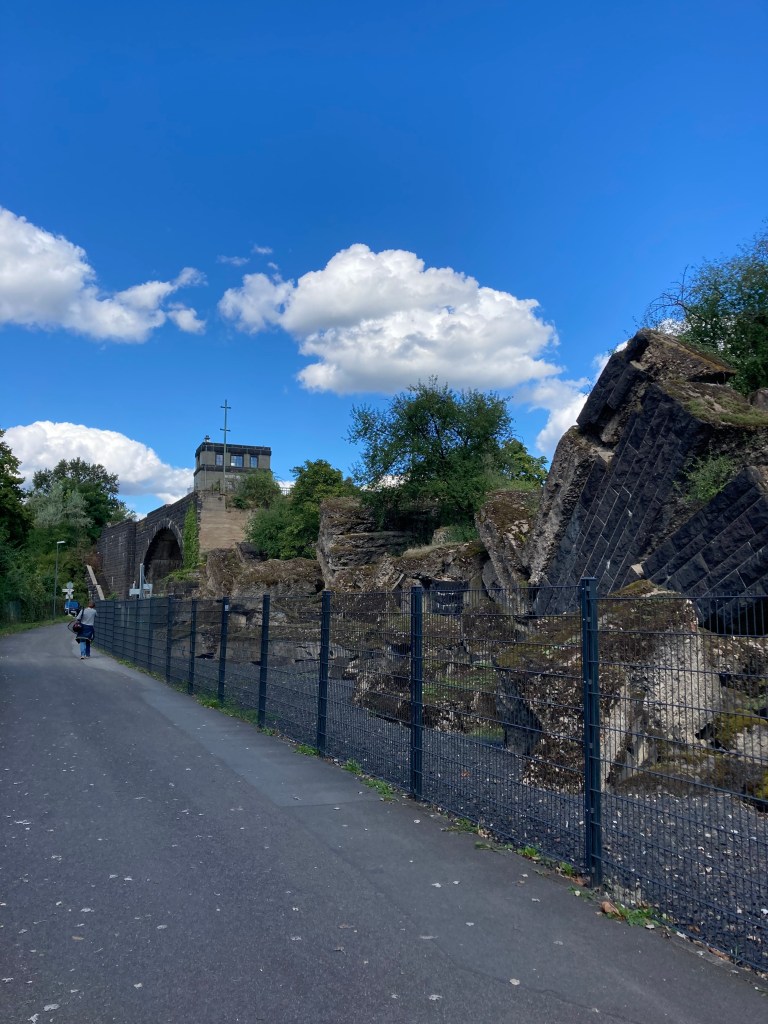
Oh, and why no bridges, all ferries? Hitler’s last stand was to make the Rhine his barrier; so ordered all the bridges, rail and road, to be destroyed. I only found out because I’m pitched next to the remains of the Hindenburgbrückke rail bridge.