
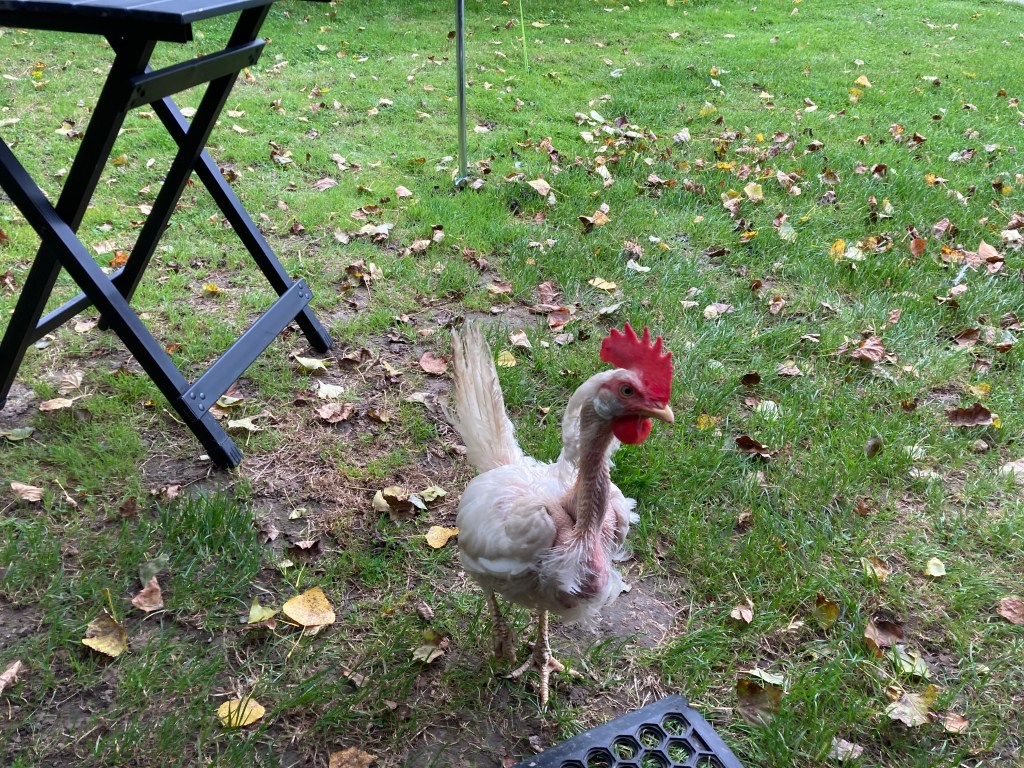
Sat here, with a very scrawny looking chicken for company. The pair of pigmy goats, who are just uncontainable, have visited, wandered round, then beggared off again. Tempted by stale crusts, I got the henpecked chicken to follow me back to the coop, where she lives, or ekes out an existence, with a dozen or so others, mostly ornamental chickens, plus a peacock and hen. Scrawny shows me how she gets in and out, as she’s thin enough to get through the higher mesh. In an adjacent aviary, there’s a delightful collection of grey parakeets; quail; finches and canaries.
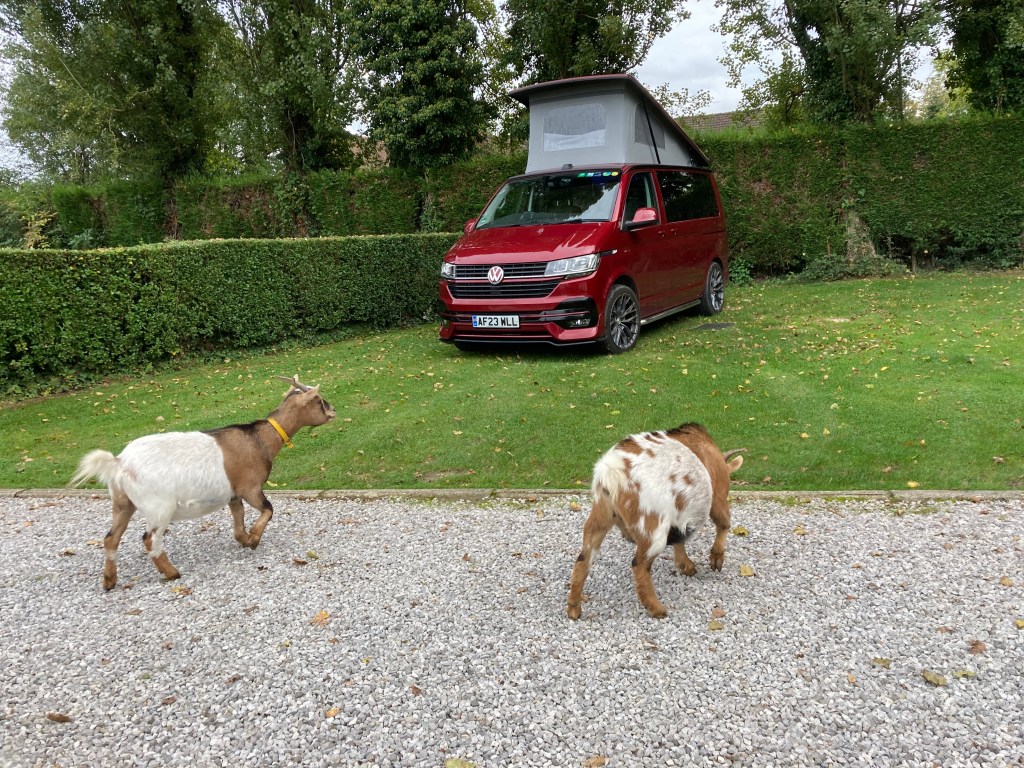
Camping Bloemstraete (Flower Street, in Flemish) is a pleasant small site, mixed statics and touring pitches, run by Julie and Nicolas, a delightful couple and their young daughter. I nearly went to another site in the area, when I got the email reply to my enquiry. Julie was about to take Lise to her Pony Club session – “Four years!” she said, while raising her eyes upwards. She shows me to the pitch. We have a conversation about languages, and she compliments my French, while apologising for her English. “I’m trying to learn from Duolingo” so I tell her about the video which told me not worry about mistakes, so I can babble in bad French in confidence. She thanks me for the reassurance; I tell her that her English is quite good enough, and her accent is charming! Nicolas arrives some time later, with the handle of a bucket of cleaning stuff over his arm. “Do you speak French” he asks: for the first time, I answer yes without excuse or qualification. We then proceed to have a conversation, and I tell him about the goats and the chicken. “The white one?” “Yes, with no feathers on its back.” He tells me, with a gesture of a thumb drawn across the neck, the scrawny one is about to go in the pot. I will miss her.
After the drive here from Cambrai, I realise I’ve followed the contested French border, at least since Charleville. There’s a series of ancient fortified towns: Verdun, Charleville, Maubeuge, Cambrai, Arras; and a series of more modern memorials, cemeteries, and monuments. The A26 motorway passes closely by the Canadian memorial at Vimy Ridge, while great-uncle Lionel’s remains lie in a cemetery in Sains-en-Gohelle, close by a contingent of Chinese Labour Corps.
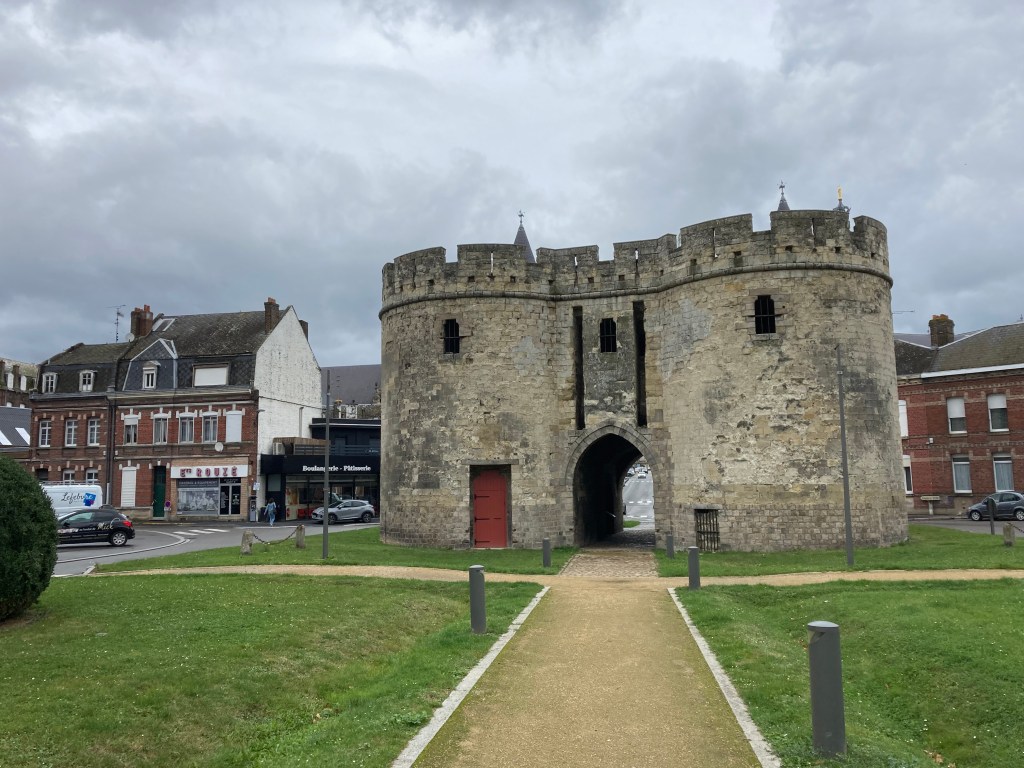
Cambrai was the archbishopric of the area; this distinction allows it to claim to be the pre-eminent city of 59 Nord departement, despite Lille being much bigger. To the south of the city was the site, in November 1917, of the first battle to extensively use tanks over 400 of them, though they weren’t reliable enough to make the desired breakthrough.
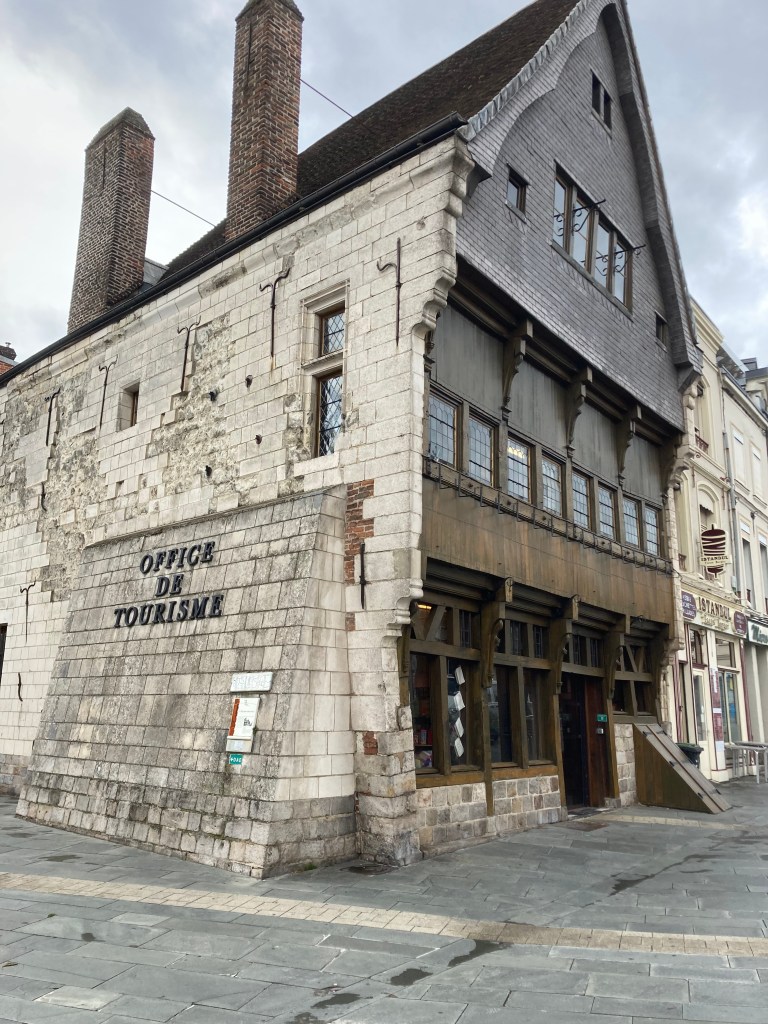
I had to wait until this morning, Wednesday, for the Musee des Beaux Arts to open. In the meantime, I had another mooch round, and had a nice chat with the ladies in the Tourist Information. I asked them if they had a plaquette autocollant, a sticky badge for my car “Un blazon, monsieur” and it was 50c. Understandably, they didn’t want to change a €50 note to pay for it (I’d misheard the price anyway). I saved that honour for Aldi. The tourist office is in one of the oldest buildings in the city, dating to when the boundaries included Cambrai in the Spanish Netherlands.
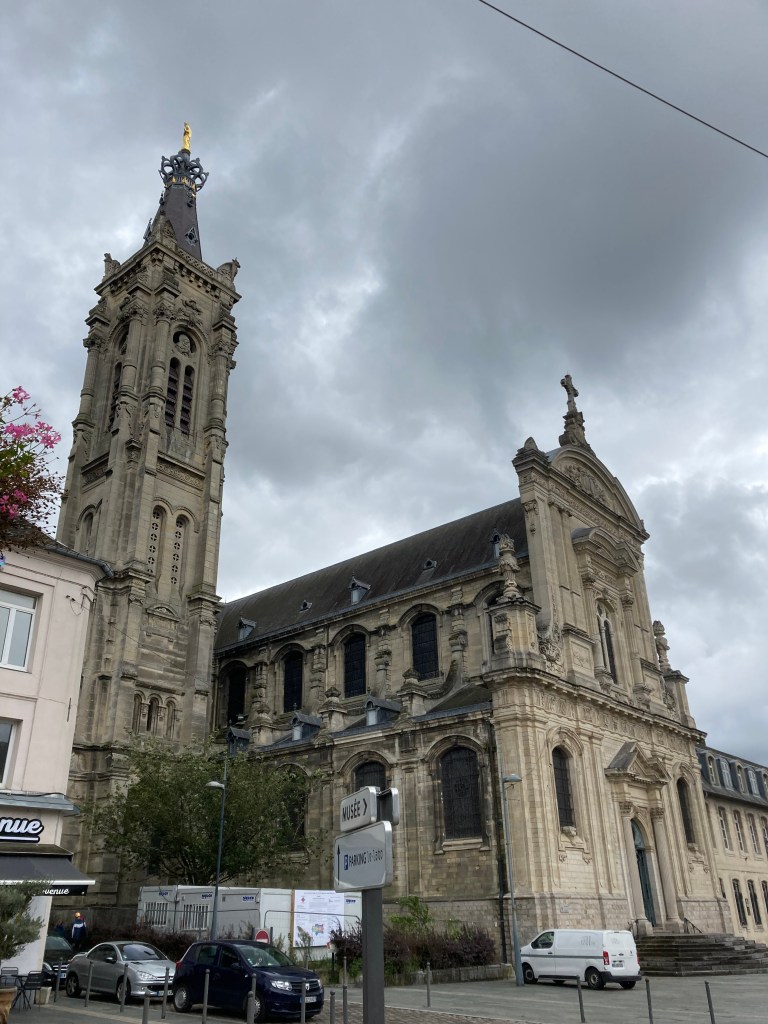
The museum was an interesting collection, with a few pieces by famous artists, Rodin among them; quite a few naked ladies in the guise of classical characters, no doubt to tittilate the tastes of the bourgeoisie. A room full of male nudes too, displaying homoerotic poses, as well as their genitalia. Don’t know what the oils of various high ranking clergy on display would make of it. In the two basement floors were the collections of various periods of prehistory, up to the Merovingians: a room full of skeletons from a nearby necropolis of theirs, and a display of grave goods, including quite a few ‘skramaseaxes’. (There were a few, of a hunting variety, in the Charlemagne collection in Aachen too). These single sided slashing tools reminded me of a hedging tool of my father’s, that was designed for layering a woven hedge fence.
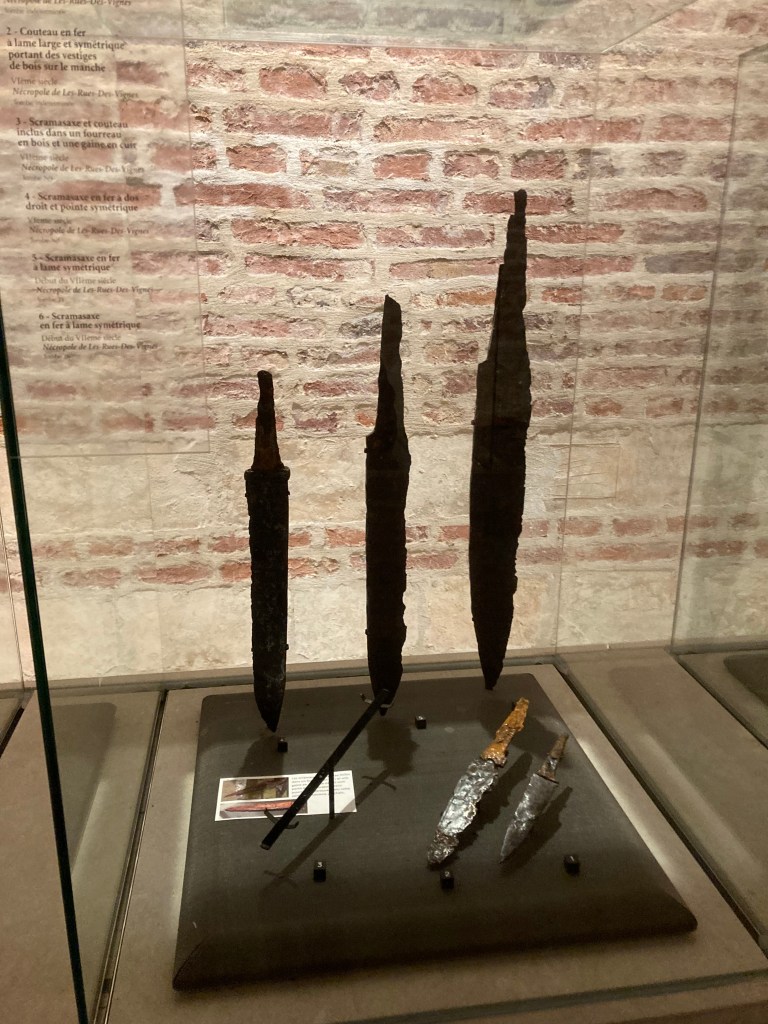
While we’re here, a geekish diversion. Most of the city is built in brick, like the vault you can see behind the swords. The construction method is alternating rows of ‘headers’ and ‘stretchers’, bricks at right angles then longwise; giving two or more thicknesses in a strong weave called, at least back home, ‘English Bond’. It is only with the recent buildings in the city that the bricks are laid in ‘Flemish Bond’ where each row goes header – stretcher – header:
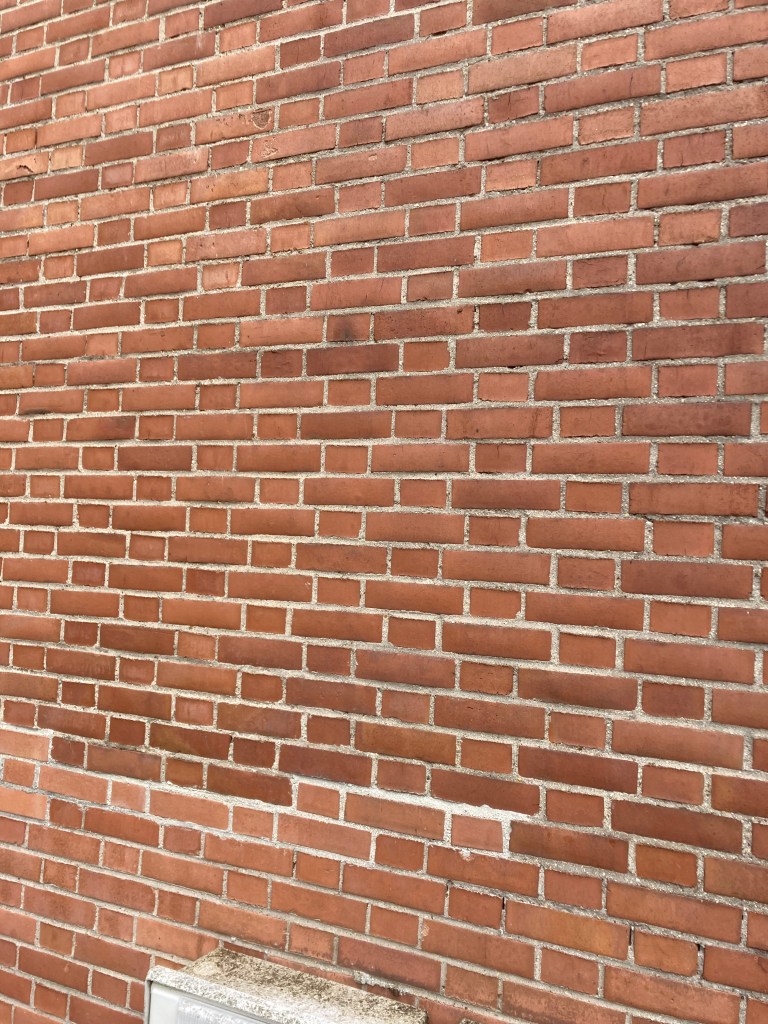
What I missed from the museum, was anything about domestic and manufacturing arts. I asked the ladies on the desk whether there was anything about cloth manufacture, showing them my John Lewis cambric shirt; they said there’s a museum of lace and broderie in the next town that close by. On Google, it looks good. Nothing about brickwork bonds though, or the history of cambric shirts.


julian, such a pleasure for Angela and I to have compared vans at Renescure. You are an inspiration to us to extend our European horizons further. Hope to see you again in a field somewhere in this great world we explore. Take care and safe travels, Angela and Steve.😁🚐
LikeLiked by 1 person
Great meeting you two, too. Thanks for your ideas too! J
LikeLike