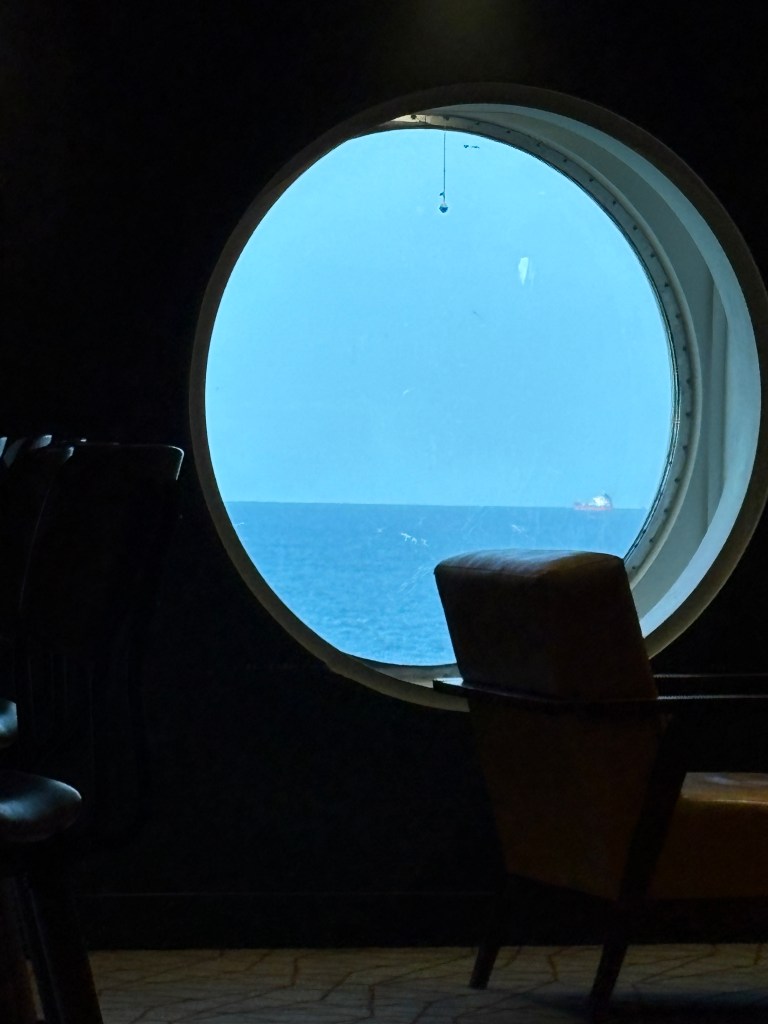
What with one thing followed by another, I’d left planning late – suddenly realising it was a week until I’d told myself I was going. Ferry crossings turned out much cheaper than the Tunnel, as it was late; and knowing I’m coming back via the Twinning event in Gravelines again, booked Dover-Dunkirk. All I have to do is decide where to go! There’s a line in a play by James Saunders: “Being born and dying are the certain bits: as for the middle, you’ll fill it up somehow”.
The day started bright, with the Morning Star shining bright in the dawn sky. The last time I’d seen it was two years ago, in the days following Rosie’s death where it had seemed a consolation, so it seemed like good omen. Driving down to the Dunkirk ferry at Dover with the sun rising over the Whitfield roundabout, also recalled long-forgotten memories of early expeditions we’d taken. In the queue I chatted to a man from Groningen, about his travels in Wales and the West Country; his love of church organs; and about his Friesian identity. It’s these random moments that make a holiday. we chatted again as the ferry was docking at Dunkirk: both of us were trying to map the harbour against the film of the evacuation.
Last year I’d tried to book into a campsite at Trier, on the Moselle; but space was there none. The world and his wife are trying Mosel wine in September. But what if I book a little earlier, I thought? Sure enough, I was able to secure a pitch, with the aid of Google Translate for dealing with the German text. So, although I’m going South, (aiming for warmer climes) particularly after hearing the Met Office podcast talking about the Jet Stream moving south, and bringing cold fronts with it, I’m starting off going East. The Roman remains are highly regarded, and it would be rude not to pop into Karl Marx’s birthplace museum.
The route took me across the width of Wallonia; (I wasn’t really impressed) and on into Luxembourg. I was hoping to find a service station with an ATM, but not in luck. I even asked for help: nah. Even the toilets were €1 to get in, and you’d think for that price they could have smelled better. Luxembourg even had a separate counter for buying cigarettes: I’d forgotten we made use of that facility last time we passed through.
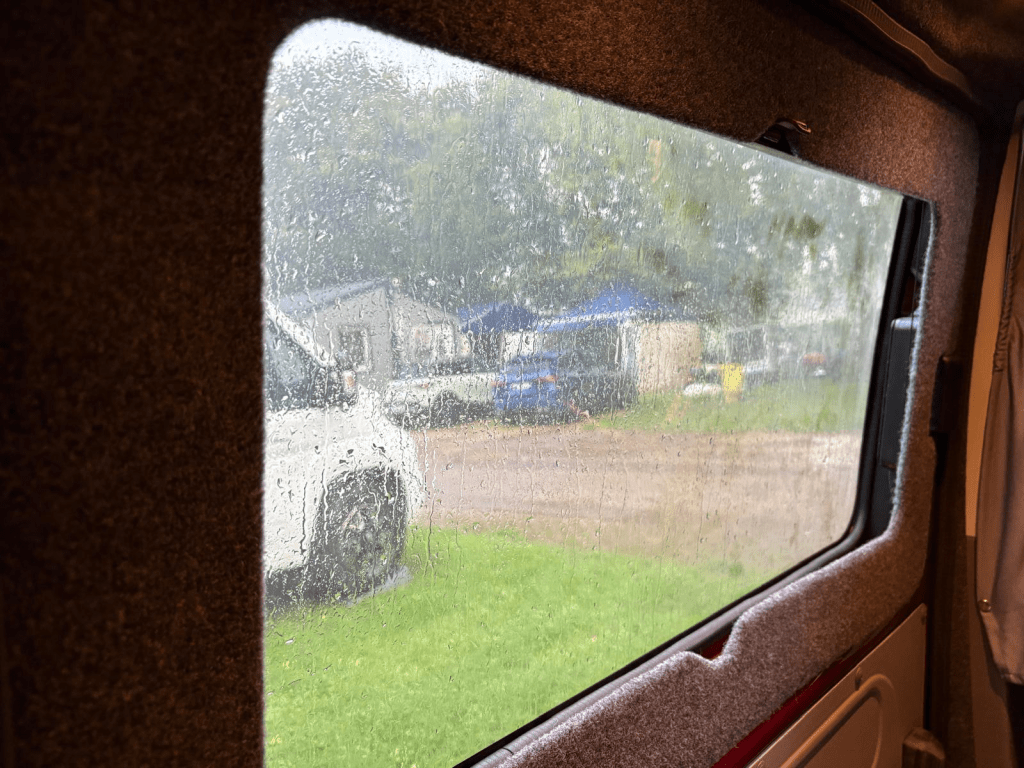
First impressions both Trier and the campground: a little strange. The area down by the river seems to specialise in sex shops, massage parlours and the like. The gents loo at the campsite has a condom machine, not sure whether that’s relevant. And whether the sex shops are there to satisfy horny sailors plying their trade on the rive – there’s a regular number of passing barges in either direction, but no quays or moorings I’ve found. The campsite’s other peculiarity is the access fob, which monitors the amount of water used in the shower, except I couldn’t make it work this morning. And I will be billed for the amount of electricity being used.
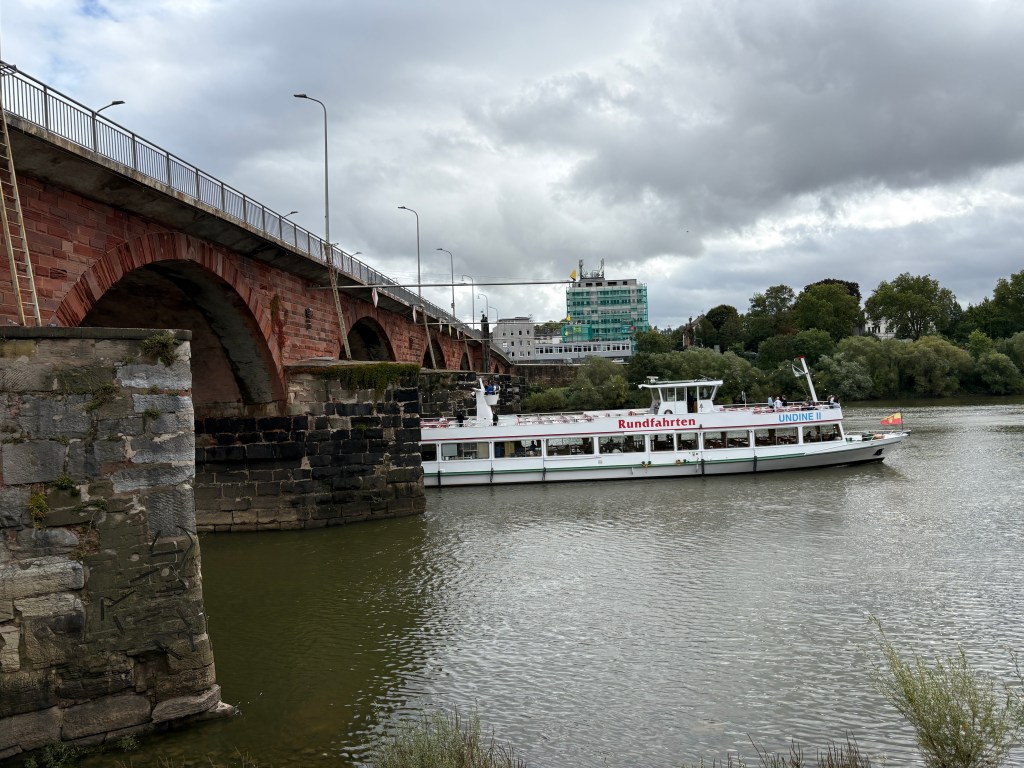
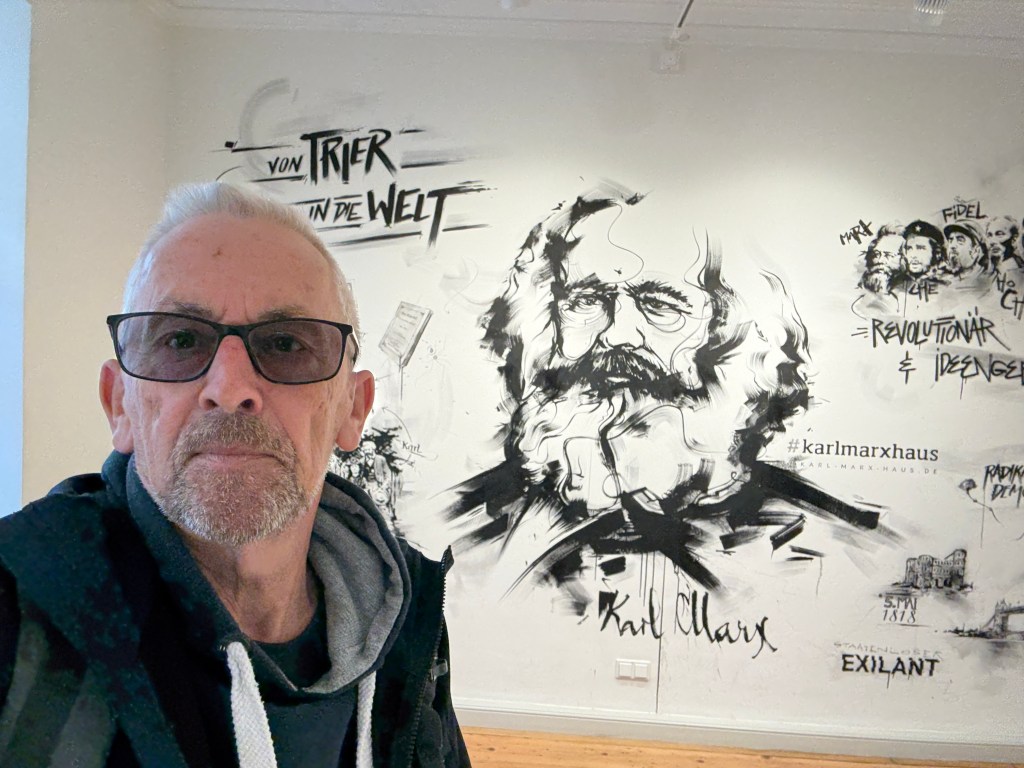
After the overnight rain had passed over, walking into Trier along the riverside walk was pleasant. Im always surprised how far things are in real life compared to the map. Crossing the ancient Römerbrücke, and walking up Karl Marx Strasse looking for the birthplace museum, I managed to miss it and had to retrace. As a pensioner I got in for €3.40, absolute bargain, and I learned so much not just about the man, but also the history of socialist parties across Europe and latterly the world, told in a straightforward manner, and contextualising the many names I’d come across. The museum is run by an SPD institute, and does its job very well. It even sells Marx fridge magnets. The exhibition starts with the man’s birth and bringing; his history in the context of European radicalism; a room dedicated to Engels, then exhibits tracing the chequered history and legacy of his ideas, including the split between Social democrats and Communists. It even went up to comment on Tony Blair and Gerhard Schröder, realigning Europe’s two largest social democratic parties in favour of a rapprochement with Capital. Food for thought on the future of socialism.
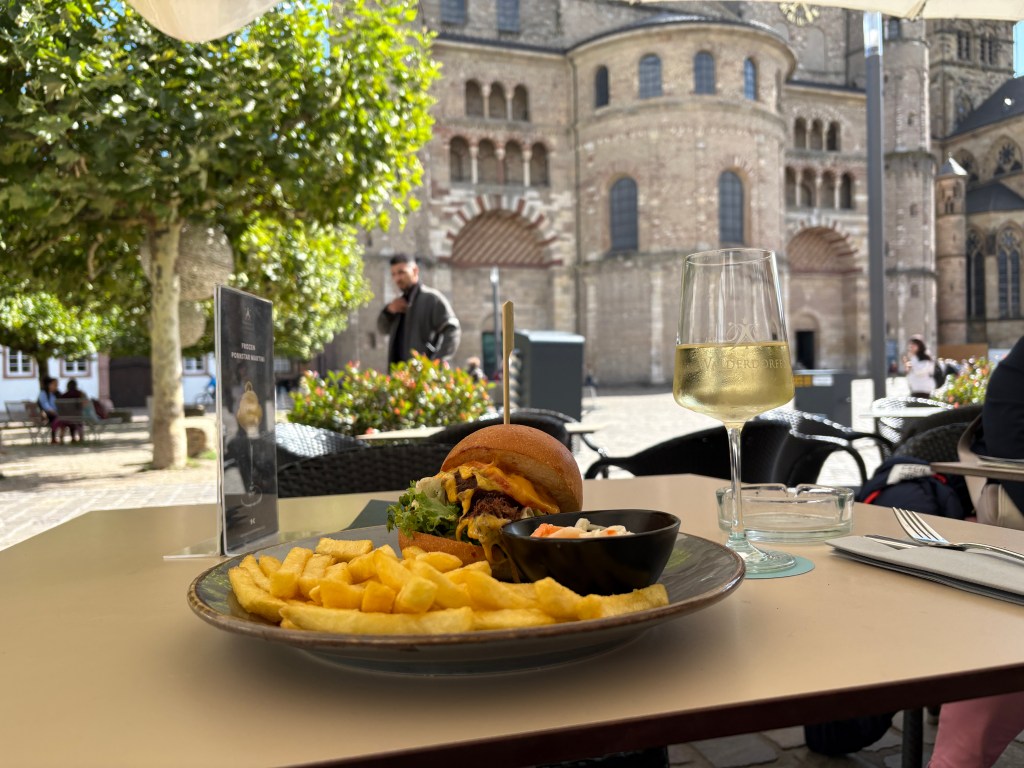
It wasn’t too far into the old town, where I managed to find the Catholic cathedral. As it was one o’clock, I stopped at the hotel opposite (a former palace I think) for lunch and a glass of Reisling, watching people cross the square in front of the Cathedral. As far as I could make out, it was built out of bits of roman masonry lying about, very weirdly romanesque in style too. Inside there was a lot of very fine marble, saints everywhere, being photographed by reverent tourists, and me.
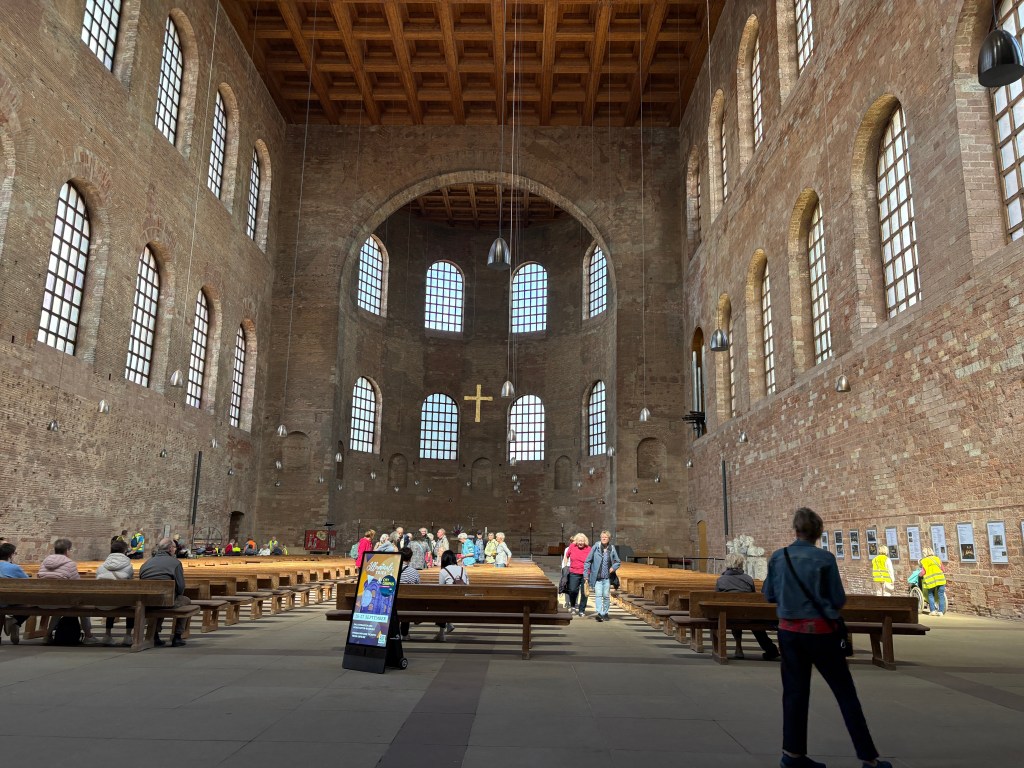
Off then to see the Porta Nigra, the former city gate, and the largest Roman building north of the Alps still standing. So that’s a tick. And now starting to flag. I decided to blow out the Marcus Aurelius exhibition, even if I could find it; but went looking for the Constantine Basilica by way of some back streets. This is the Protestant cathedral, built at part of his palace by the emperor Frederick William IV on the foundations of the Roman seat of government, before the building of Constantinople. deliberately kept plain to emphasise the purity of the protestant vision, but clearly built to impose the imperial vision of the emperor. It was burnt out by allied bombing in 1944, but has been restored. It’s a vast barn of a place, with the altar where the imperial seat of judgement would have been. And the two organs would have really pleased my Frisian chum (see previous post!).
On the way back to the van, managed to find branch of Deutche Bank with an ATM. I collapsed onto the sofa, having managed 13000 steps, 8Km. Tomorrow, after a good night’s sleep and a warm shower, we head for the Beaujolais.
 Willma’s travels