
Grey skies were showing over the Markermeer, the Zuider Zee as it was before the Dutch completed their masterpiece of hydraulic technology by cutting it off from the North Sea. The view across the water is to Almere and Lelystat on the distant horizon, both build on reclaimed land, within living memory. This campsite is on a point of land next to the entrance to Edam’s harbour; with a sweet little restaurant looking out to sea, or lake, where I shared a table with Steph and Paul from Bury St.Edmunds.
The skies here give the light that extra that you get from coastal areas, plus the big skies from flat lands that I remember from childhood in the Fens. It’s something I recognise from Dutch Old Masters, a certain liquid light in the best of their landscapes; different again from the urban light in Delft, close as is it was from the coast. The birdlife too is different: duck; geese; cormorants; and busy little wagtails have replaced the passerines, herons and cranes, wood pigeons and parakeets of the woodland.
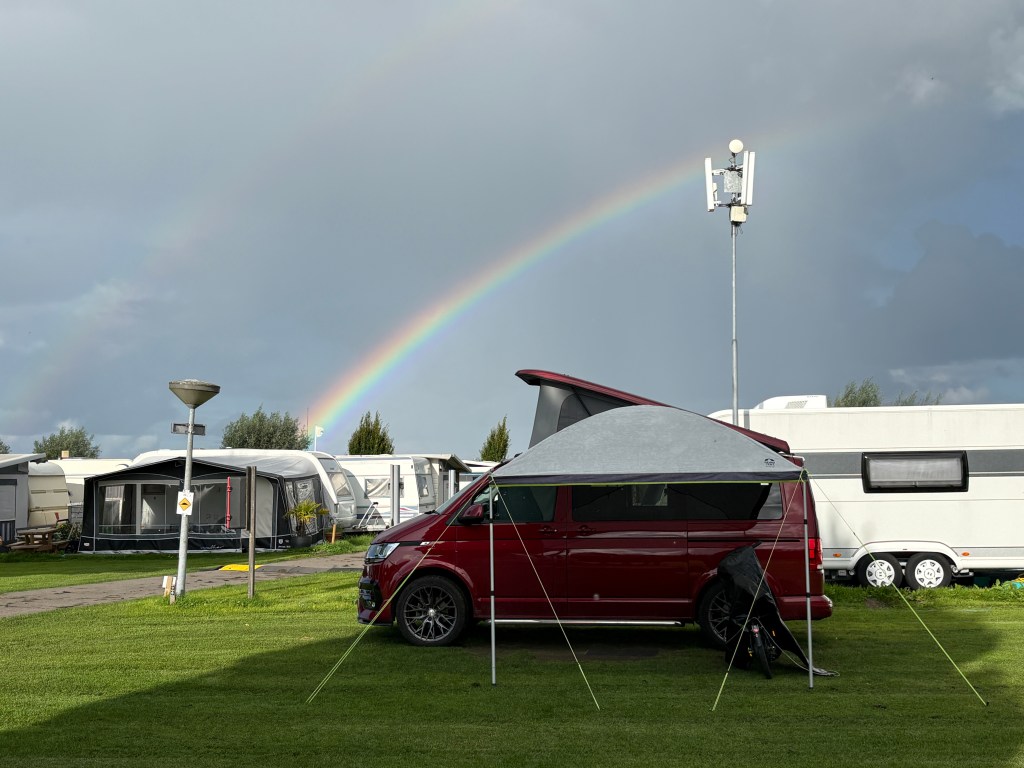
As it is, as my granddaughter would say, bucketing down, I thought it was time to start catching up on recent adventures. I left you after my trip to Rotterdam on Monday. The next day I took it a little easier, and strolled into Delft to look at the churches. Strange seeing medieval building converted to Lutheran worship, with the pulpit as the focus halfway, and sideways, in the nave. The crypt Neuwe Kirk is the resting place of the Dutch royal family; the only folk allowed to be buried there after it started getting rather smelly. Catching another couple speaking English, (Trevor and Sandra from the Sherwood Forest area, though Saddleworth originally) we walked into town together, and ended up table sharing that evening. I think I’m getting the hang of this; and getting used to other people enjoying making connection, albeit temporary, as part of their holiday.
Wednesday was a blast up the motorway, on the Amsterdam outer ring road, passing Schiphol airport – like CDG in Paris, it has a taxiway which crosses the motorway. I managed, at the second attempt, to find a filling station with diesel, and with AdBlue additive too to stop Willma nagging me every time I turn the key. Having some time to spare, I decided to stop at the Zanse Schanz museum, famous for its working windmills. These are in a state working preservation, sawing timber; grind pigments; extracting peanut oil. Most seemed to date from the late C19th, though one was earlier.
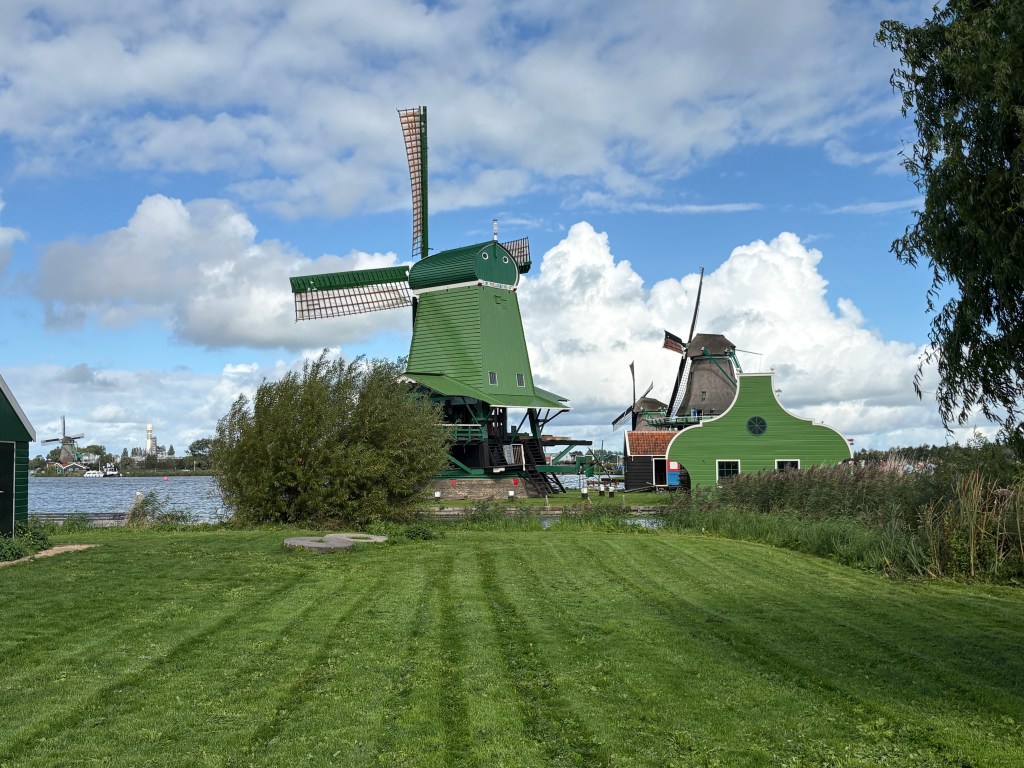
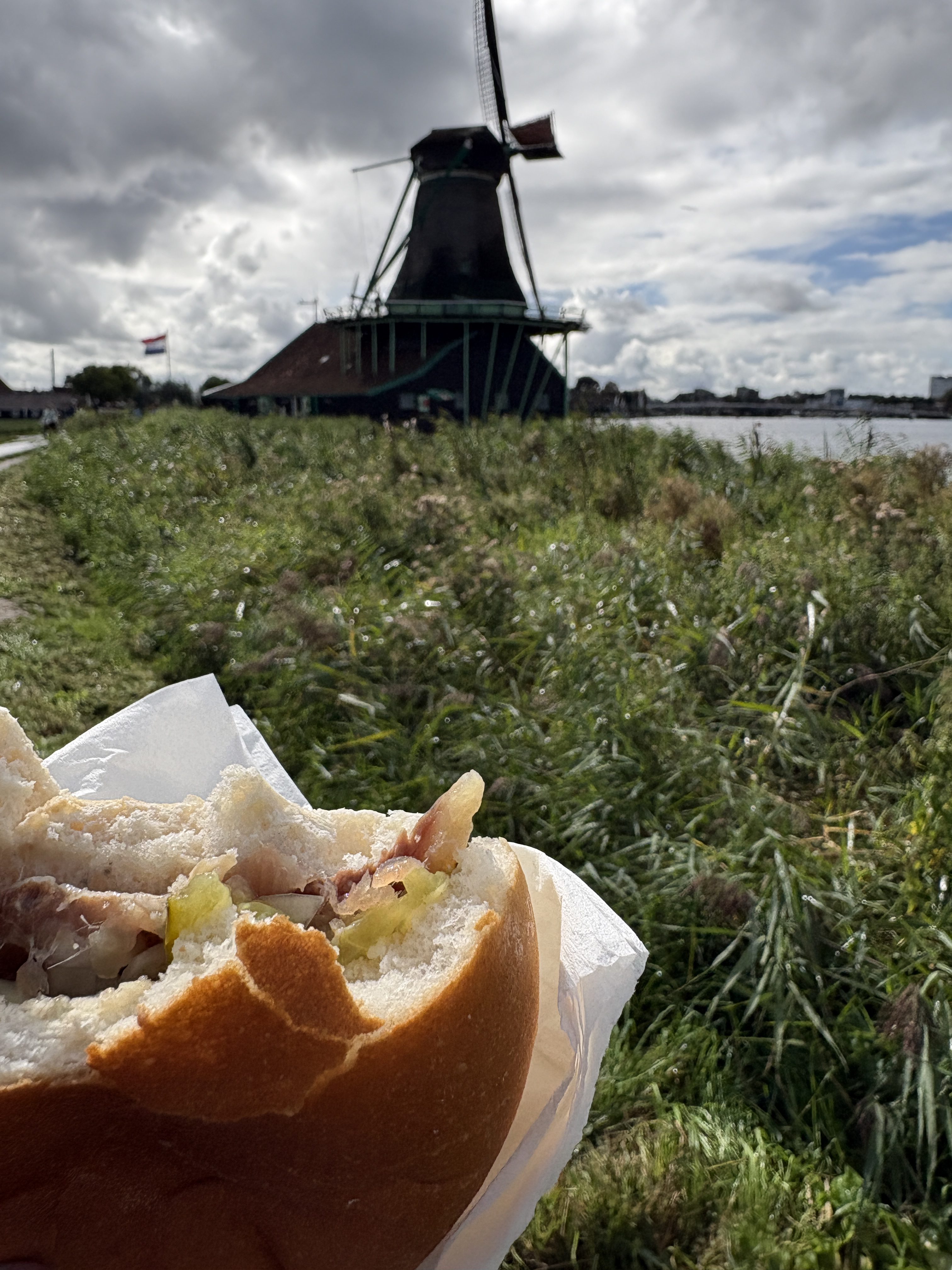
The museum itself I didn’t bother with, but the walk around what is a well-known tourist hotspot was worth the €15 parking fee. I managed to avoid the suggestion of talking the ferry across the river to the village; though some Americans I’d been chatting to were persuaded. The boatman was a really good salesman. And there were plenty of us for him to practice his arts upon: I suspect many from package tours to Amsterdam. Lunch was a pickled herring in a bun: I read that the proper Dutch way is to eat your raw herring by the tail, though that didn’t seem to be an option, and not one I would have taken anyway.
My stroll into Edam next morning was more of a health exercise; following the canal took me past some lovely houses, and I couldn’t help but look through the windows of many. Highlight of the trip was a visit to the Edam Museum, in the oldest stone house in the town. (It actually has a city charter dating from the Middle Ages, but feels much smaller.) The volunteer lady on duty was a mine of information. and very keen on imparting it. We agreed that story telling was important. The history was interesting: originally built in the C16th by a wool merchant, who commissioned shipwrights to frame the house; and imported stone for a façade. It was then owned by a sea captain, who was wealthy from the trade of the VOC, just up the coast in Hoorn. Edam benefitted from this burgeoning commerce (my informant described it basically as mostly organised piracy), by redistribution the valuable goods on a more local basis. At the same time, the polders to the north were formed from the silt, allowing a dairy industry to develop – hence the famous Edam cheeses. In the bottom of the house, the sea captain commissioned a floating cellar: basically a large tank. or square barge, that raised and lowered with the water table. Clever engineers, these Dutch!
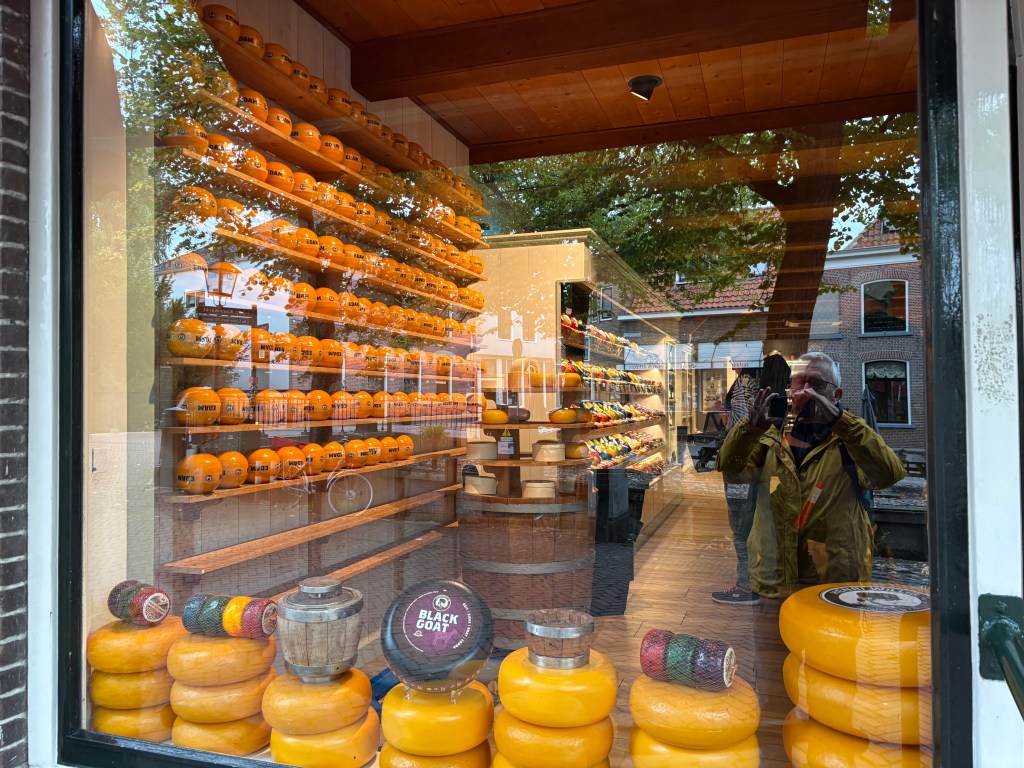
After that, I found the local Albert Heijn – I think there are other supermarkets, but AH is everywhere – to stock up with more milk etc.; then a walk back to the van, past Edam’s windmill across one of the many dikes. Back onsite, it started raining: gently during the afternoon, then heavily towards evening. The doormat outside of the van was nearly covered in the puddle that formed; and my walking shoes were soaked. Others had more trouble. One of the staff came up with the tractor to pull out a motorhome that couldn’t get traction in the turf. That’s the trouble with Holland being basically mud: in heavy rain it feels like the sea wants to reclaim its own. Incidentally, the museum explained the local sluices, that, like the Thames Barrier, let water out when the inner level is higher, then shut when the outside is higher. I now understand why I was seeing big weights on them , and where the notion of sloping gates back in Delft had come from.
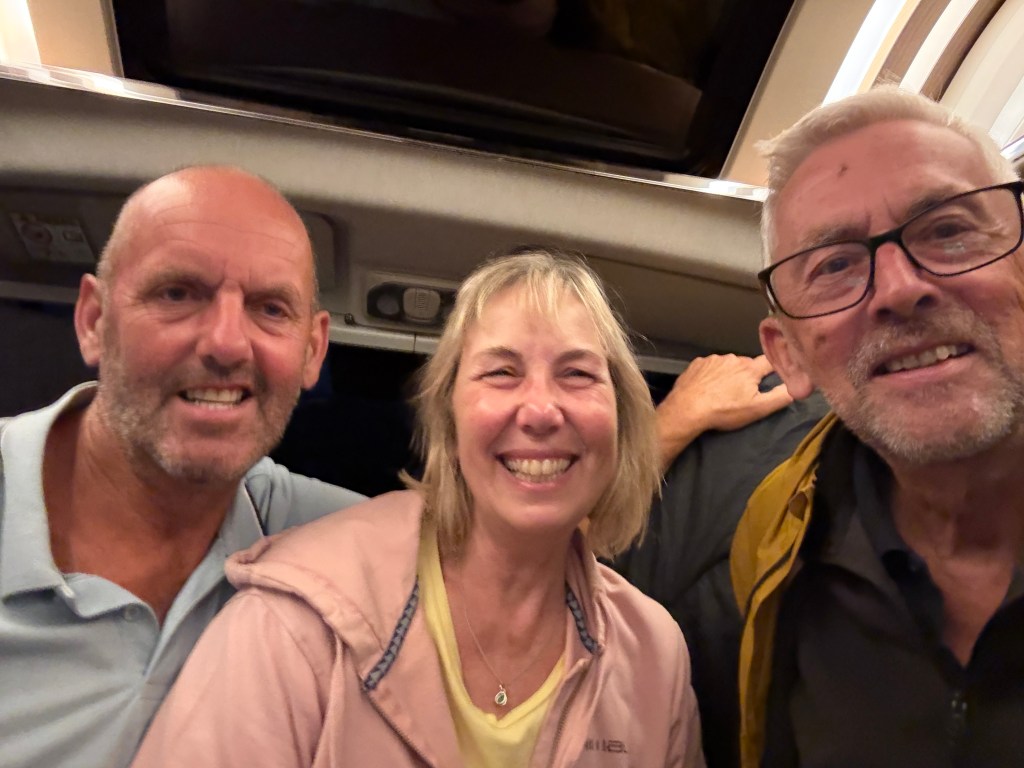
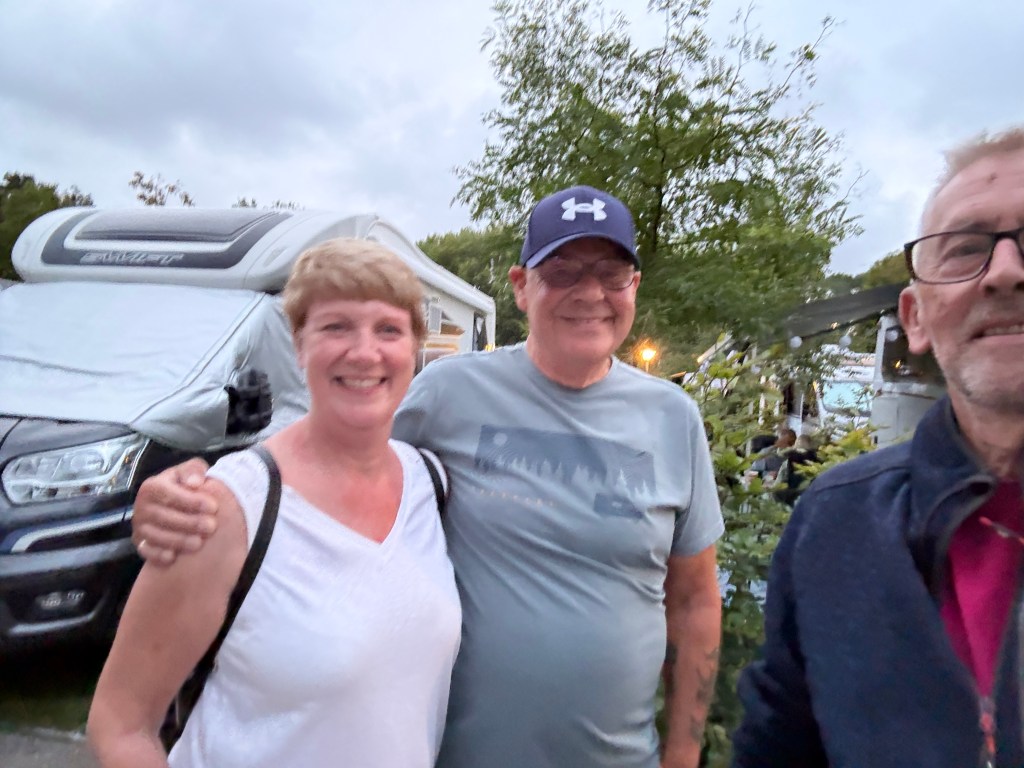
In the evening there were some drier spells. I popped round to Paul and Steph’s van, after an invitation, to take the photo, and have a cup of tea. A lovely couple, and easy and eager conversationalists. Paul was tapering into retirement, working only when he wanted. Steph had developed a bereavement cafe with her local church, which sounded really good, and was helpful in her suggestions for my future plans. She was very concerned that I wasn’t eating enough – and had persuaded me into a portion of Dutch apple pie and cream at the restaurant.
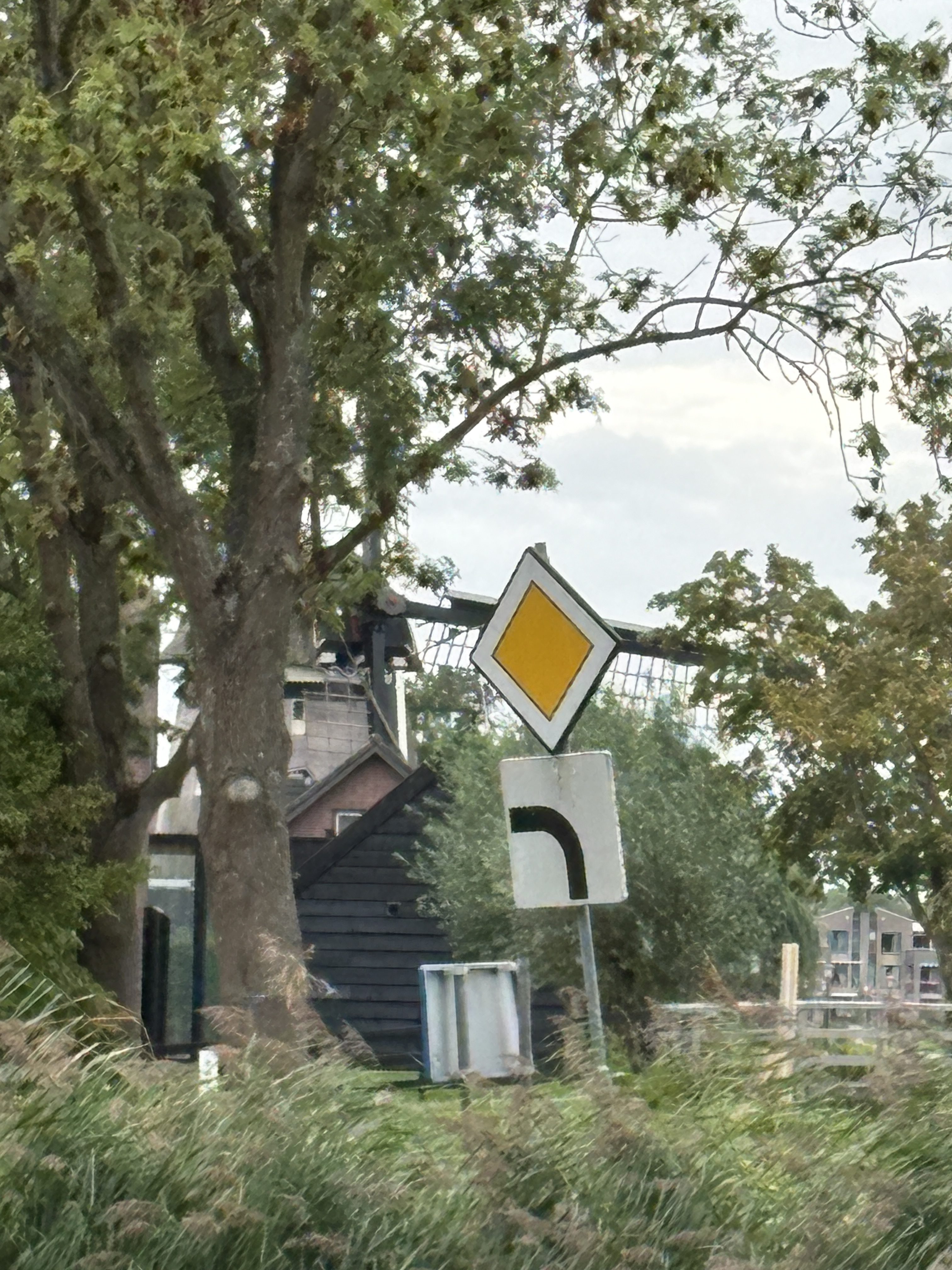
The weather forecast is an improvement, but it doesn’t look warm, so I’m changing all my plans, because I can. I’ve booked for six nights in Chalons-en-Champagne, where I’m guessing the vendage will be underway, and where the forecast is for mid 20’s. The rest of the Netherlands can wait for warmer weather.
 Willma’s travels