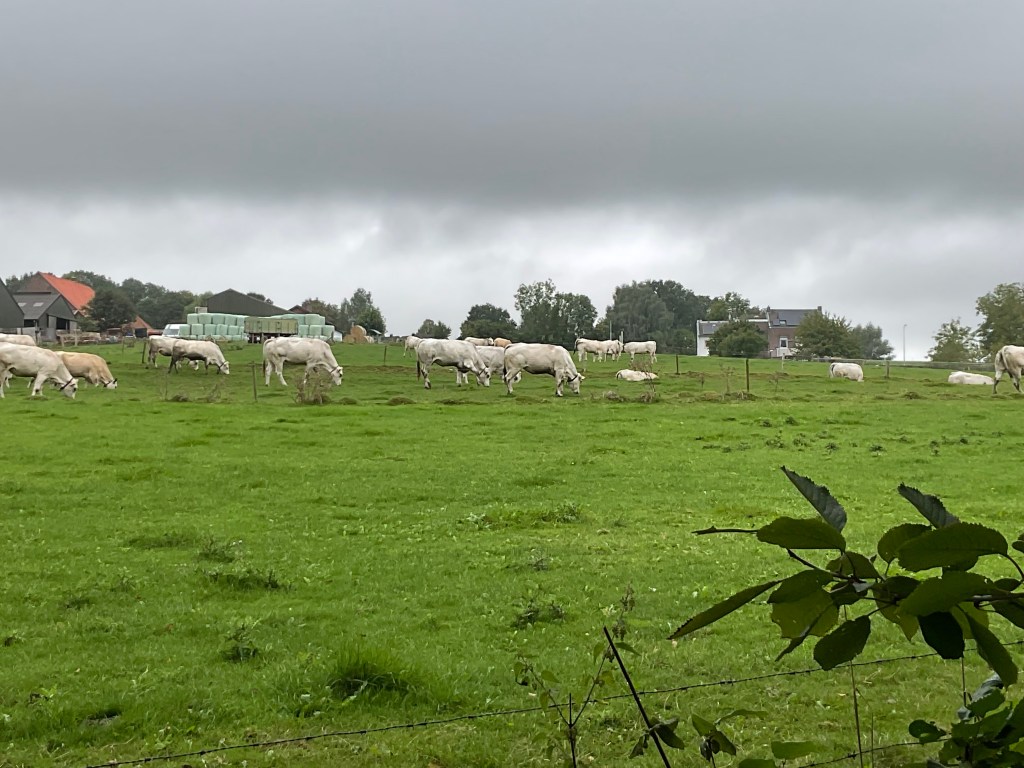
It turns out the cattle next door are Piedmontese breed – https://en.wikipedia.org/wiki/Piedmontese_cattle. On my way back from the bus stop, after visiting Aachen, I dropped by the farm shop, where they sell the meat from their own farm; so I was able to elicit from the farmer’s wife ( making a big assumption there) the facts of the matter. All their produce is local, including the bottle of Reisling: label says Mergellendse wijn; few tomatoes, some radishes; lovely Victoria plums for dessert, Sunday lunch looks quite promising.
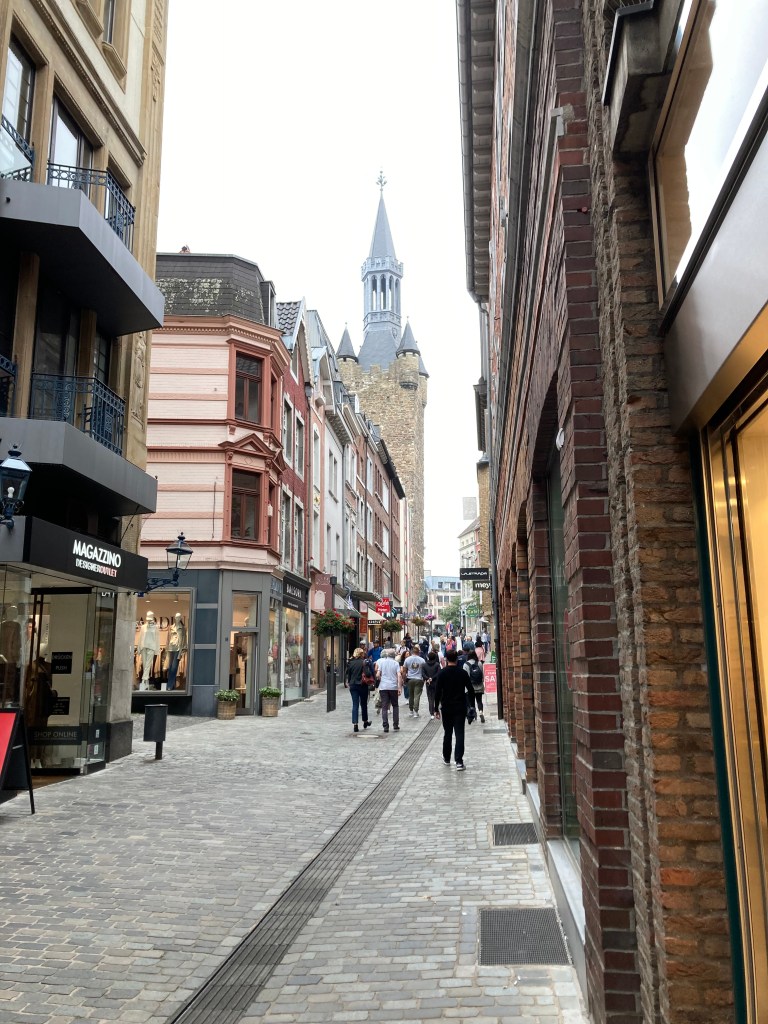
The 350 bus goes to the centre of Aachen, with a tap in, tap out on the credit card. I got off at the hauptbahnhof; there was a sign that pointed vaguely towards the Aachener Dom (I know enough German to know that’s where my quest was heading), as if to say, “Over there somewhere.” After walking downhill a while, suddenly caught sight of a mass of masonry, spires and cupolas.
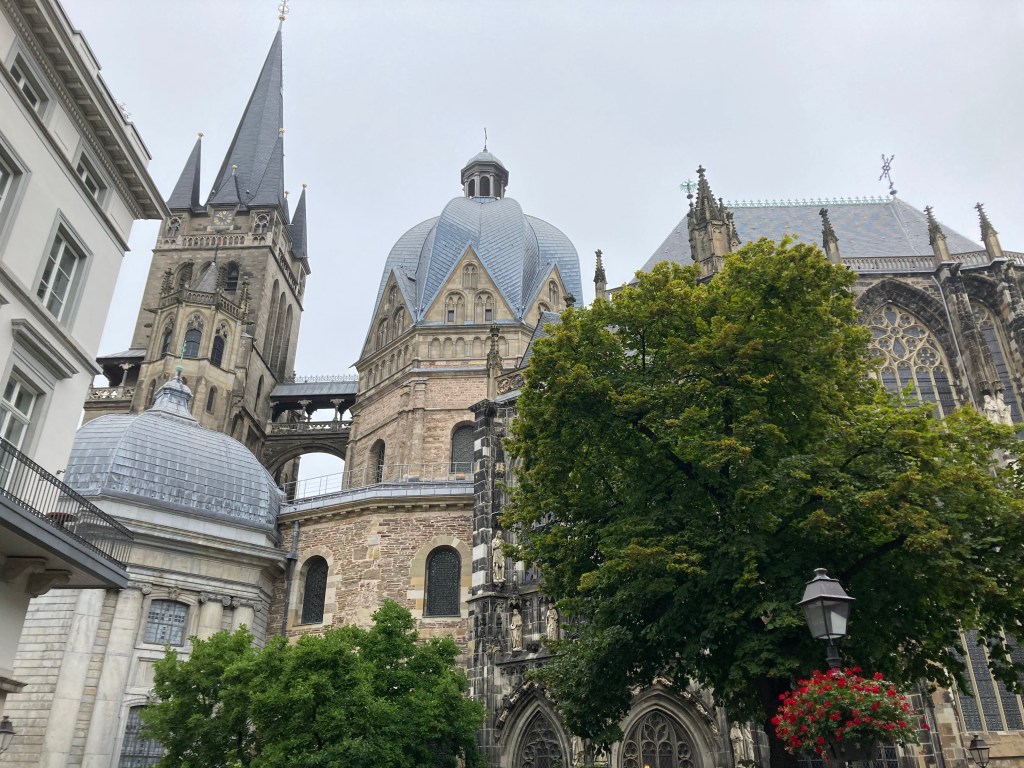
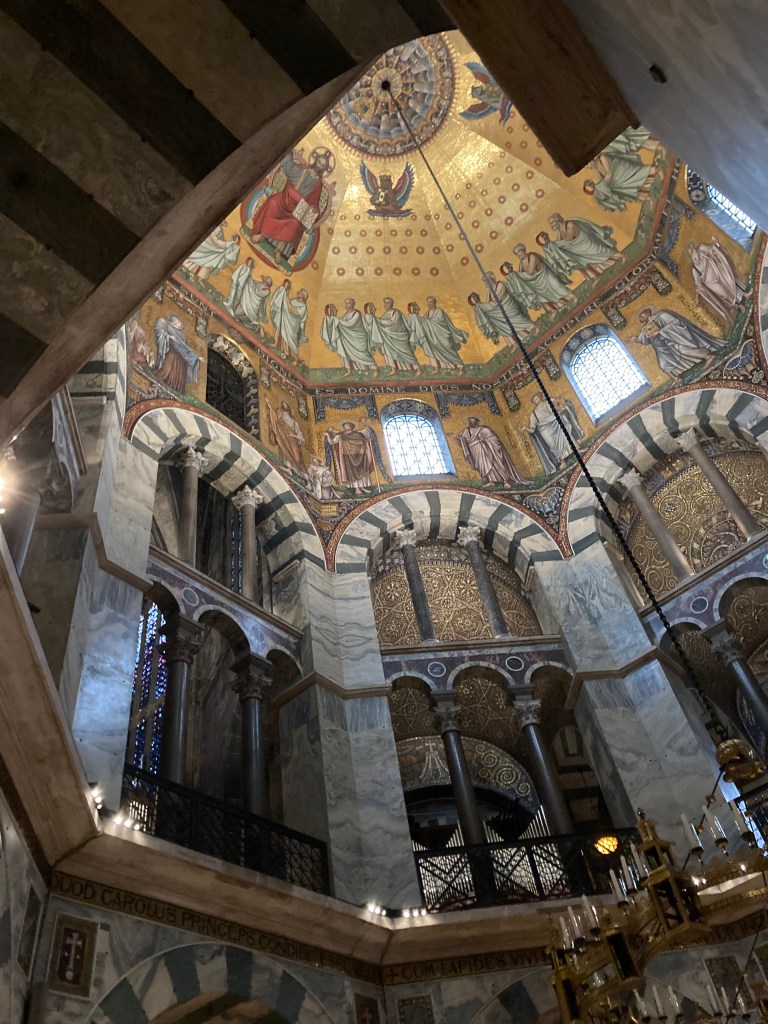
Built around 800 by Charlemagne – well, he got blokes to do it – was the first domed structure north of the Alps. Definitely a prestige project, the nave is octagonal. The whole thing is covered with ornate mosaic, giving it a very Byzantine feel – in the Charlemagne centre next door, there were models comparing the Dom to the round church of ?San Vitale in Ravenna, again a late Roman imperial centre. What with the big guy’s throne, and gold plated sarcophagus, the messaging is clear: we (I) am the inheritor of Roman power and prestige, which is God-given. This is the start of the Holy Roman Empire; as Voltaire quipped, not Holy, not Roman, and not an Empire.
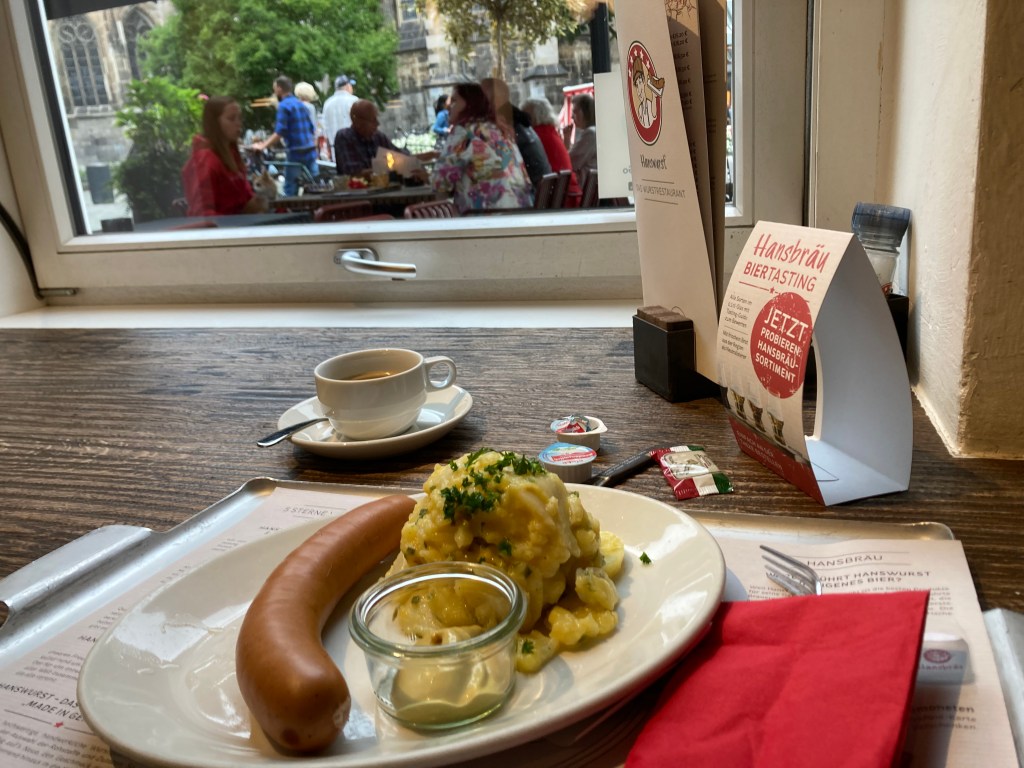
After this awe-inspiring display of ecclesiastical and imperial power, I needed lunch. Frankfurter, potato salad, and mustard seemed appropriately local.
After lunch a little more sightseeing, wandering about, seeing Townhall, and the museum; the cathedral treasury cemented the images of power, particularly when Charlemagne became canonised two hundred or so years later. The weirdness of the notion of relics, to my eyes, is there when the spotlight shines on the gold covered reliquaries, one containing bones from his forearm; the other one, perhaps the most famous image of Charlemagne, part of his skull, and a crown from another emperor. All getting in on the act.
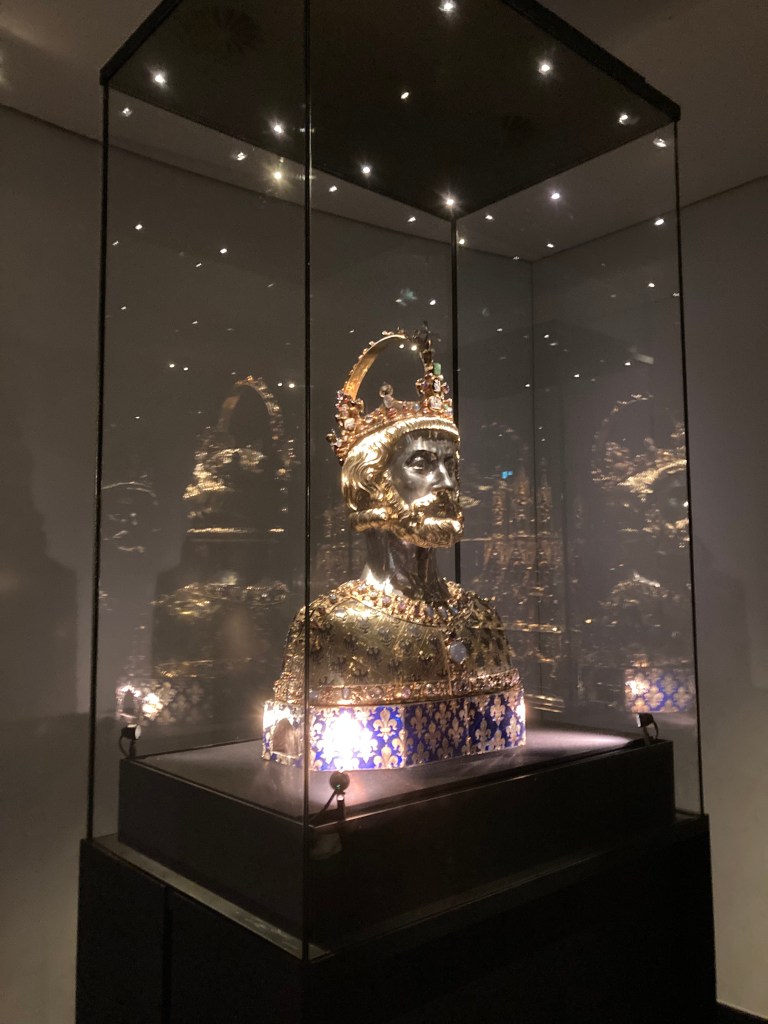
The label said it wasn’t meant to be realistic, but the idealised picture of kingship: noble, spiritual, and so on.
Finding my way back up the hill to the train station, eventually found a bus stop for the 350, which took me on a roundabout route back to near the campsite. Walking back, which topped up the total to around 10,000 steps, lead past the farm shop where I got my steak, and the few fruit and veg bits. Tomorrow a little more local.